
Do you ever feel tingling in your hands, burning in your feet, or discomfort that seems completely different from an ordinary sore muscle?
Maybe an area feels unusually sensitive to touch. Maybe pain seems to travel instead of staying in one spot. Or perhaps a muscle that once tolerated firm pressure suddenly feels tender or uncomfortable.
Those sensations may involve nerve sensitivity.
The tricky part is that nerves and muscles work closely together, so it is not always easy to tell whether discomfort is coming from a tight muscle, an irritated nerve, or several things happening at once.
That matters when choosing the right kind of care.
Here at Be Balanced Bodywork in Grand Rapids, we work directly with muscles and other soft tissues through massage therapy. Massage can often help surrounding muscle tension, relaxation, and general comfort– but it does not diagnose or cure an underlying nerve disorder.
This guide will explain nerve sensitivity in simple terms, how it may contribute to muscle pain, why the body sometimes tightens around painful areas, and where massage may fit into an overall pain management plan.
What Is Nerve Sensitivity?
Your nervous system is constantly collecting information.
Sensory nerves help your brain recognize things like:
- Pressure
- Temperature
- Touch
- Pain
- Vibration
- Position
- Movement
Most of the time, this happens without you giving it much thought. You touch something warm and know it is warm.
You step on uneven ground and automatically adjust your balance. You bump your elbow and immediately know exactly where it happened.
Nerve sensitivity becomes more complicated when nerves or the nervous system become more responsive to stimulation than usual.
This may happen for many reasons, including:
- Nerve irritation
- Compression
- Nerve Injury
- Inflammation around a nerve
- Repetitive movement
- Certain health conditions
- Peripheral neuropathy
- Previous injury
- Changes in how the nervous system processes pain
Depending on the cause, normal pressure or movement may start to feel uncomfortable.
Some people experience increased sensitivity to touch. Others notice tingling, burning, numbness, throbbing, shooting sensations, or pain that travels along a particular path.
The important thing to understand is that nerve sensitivity is not one specific diagnosis.
It is a broad way of describing how the nervous system may be responding.
That is why persistent or unexplained nerve symptoms deserve proper medical evaluation.
What Does Nerve-Related Discomfort Feel Like?
Nerve-related symptoms can feel very different from the soreness you might expect after a workout.
Common sensations may include:
- Tingling
- Pins and needles
- Burning
- Numbness
- Shooting pain
- Electric or shock-like sensations
- Unusual sensitivity to touch
- Throbbing
- Weakness
- Changes in balance
The Foundation for Peripheral Neuropathy notes that neuropathy symptoms frequently include numbness, prickling, tingling, burning, freezing, throbbing, or shooting pain, although symptoms depend on which nerves are affected.
These sensations do not automatically mean you have peripheral neuropathy. Nerve symptoms can have many possible causes.
But they are useful clues that the discomfort may not be coming entirely from muscle tissue.
How Nerve Sensitivity Can Affect Your Muscles
Muscles and nerves depend on one another.
Motor nerves help tell muscles when to contract. Sensory nerves provide information about what is happening in and around the tissues.
When an area becomes painful or unusually sensitive, your body often responds protectively.
One common response is muscle guarding. Muscle guarding happens when muscles surrounding an uncomfortable area tighten in an attempt to protect it.
Imagine that something hurts near your lower back.
Without consciously deciding to do it, you may:
- Move more carefully
- Tighten nearby muscles
- Avoid bending normally
- Shift your weight
- Walk differently
- Hold your body more rigidly
At first, those adjustments may feel protective. But if the pattern continues, surrounding muscles can become tired, tight, and sore. Now you may have both the original discomfort and additional muscle tension around it.
That is one reason nerve-related pain and muscular pain can start blending together.
Why Nerve Sensitivity and Muscle Pain Can Feel Connected
Let’s say you have irritation somewhere along a nerve pathway. Your body senses discomfort, so nearby muscles tighten.
Those tight muscles may then become sore because they are working harder or staying partially contracted for long periods.
You may begin avoiding certain movements. Other muscles compensate.
Soon, the uncomfortable area feels bigger and more complicated than it did initially.
A simplified cycle might look like this:
- A nerve or surrounding area becomes irritated.
- Movement begins to feel uncomfortable.
- Muscles tighten protectively.
- Tight muscles become sore.
- You change the way you move.
- Other muscles start compensating.
- Overall discomfort increases.
This does not mean muscle tension caused the original nerve problem.
Sometimes it does contribute to compression, but other times it develops because something else is happening.
That distinction is important. Pain rarely tells you its exact cause simply by how intense it feels.
Typical Muscle Soreness vs. Possible Nerve Pain
Knowing a few general differences can help you describe your symptoms more clearly, although it cannot replace an evaluation.
Muscle soreness may feel more like:
- Aching
- Tightness
- Tenderness
- Fatigue
- A knot or tense area
- Discomfort after activity
- Soreness when the muscle contracts or stretches
Nerve-related discomfort may feel more like:
- Burning
- Tingling
- Numbness
- Electric sensations
- Shooting pain
- Pain traveling along an arm or leg
- Unusual sensitivity to touch
- Weakness
There can be plenty of overlap. A tight muscle may hurt sharply. Nerve irritation may create an ache. You may have both at the same time.
That is why trying to diagnose yourself based on one symptom can be misleading.
If nerve-like sensations are new, persistent, worsening, or unexplained, speak with an appropriate healthcare professional.
Muscle Tension Can Add Another Layer of Discomfort
Even when muscle tension is not the original cause of nerve symptoms, it can still affect how you feel.
A muscle that stays tight for hours or days may become:
- Fatigued
- Tender
- Less flexible
- Sensitive to pressure
- Uncomfortable during movement
This is where muscle pain treatment may need to consider more than one contributing factor. If you only work on the tight muscle without understanding why it is guarding, the relief may not last.
For example, deep pressure on a muscle that is protecting an irritated nerve may feel worse rather than better.
Sometimes the body needs less force, not more.
Where Massage May Help
Massage therapy primarily works with muscles, fascia, and other soft tissues, making it especially useful when discomfort includes significant muscular tension.
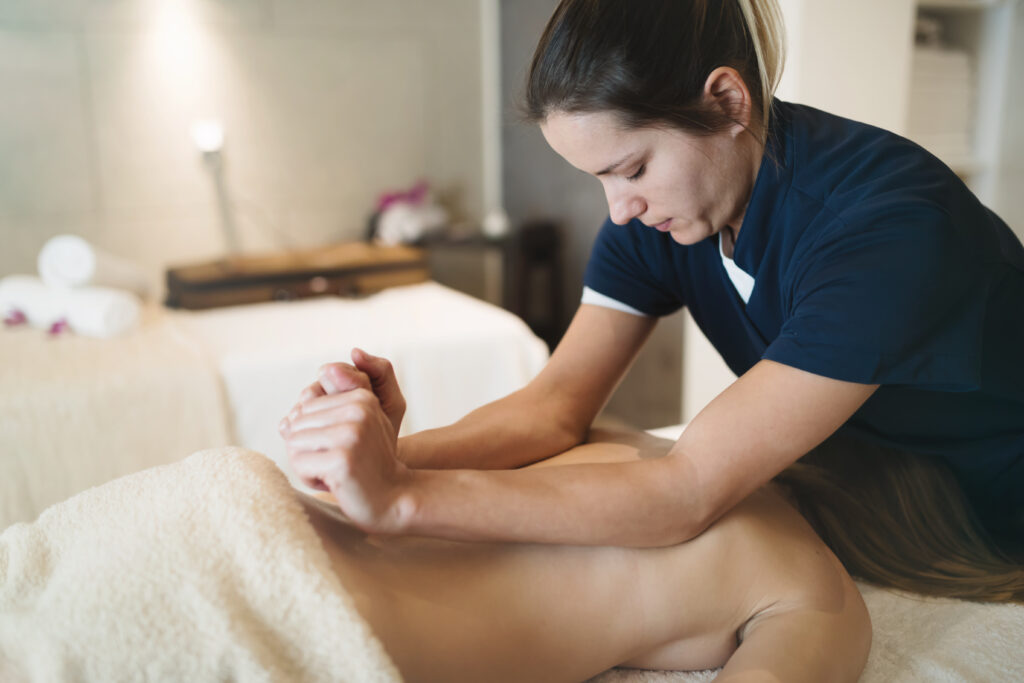
Therapeutic massage may help by:
- Relaxing tight surrounding muscles
- Supporting comfortable movement
- Reducing feelings of muscle guarding
- Encouraging general relaxation
- Improving body awareness
- Helping you identify areas where you hold tension
- Supporting overall comfort
Harvard Health notes that therapeutic massage may help relieve pain through several possible mechanisms, including relaxing painful muscles and joints, reducing stress and anxiety, and influencing the way pain signals are experienced.
Notice what we are not saying. Massage does not repair every damaged nerve. It does not cure peripheral neuropathy, diagnose nerve compression, or replace medical treatment.
When people search for massage for nerve pain, a more realistic way to frame the goal is this:
Massage may help address some of the muscular tension and physical stress surrounding the nerve-related discomfort.
That can still be valuable and provide relief.
What About Nerve Compression?
Some nerve symptoms happen because pressure is being placed on a nerve.
Examples may include:
- Carpal tunnel syndrome
- Certain forms of sciatica
- Thoracic outlet-related compression
- Tarsal tunnel syndrome
- Other peripheral nerve entrapments
AMTA’s discussion of massage therapy for nerve compression injuries explains that compression can affect blood flow and normal nerve function, potentially contributing to pain, tingling, numbness, or motor changes.
Massage may sometimes address soft tissues surrounding an area of compression.
For example, if tight muscles or fascia contribute to pressure around a nerve, appropriately chosen massage techniques may help reduce some of that surrounding restriction.
But nerve compression can occur for many reasons, including structural or medical issues massage cannot correct.
Again, knowing the cause matters.
Massage for Sciatica Is a Good Example
Sciatica illustrates this muscle-and-nerve relationship well. Sciatic pain can involve nerve irritation that travels from the lower back into the hip, buttock, or leg.
At the same time, muscles around the hips, lower back, and glutes may tighten protectively. Massage cannot automatically fix the underlying cause of sciatica.
But reducing surrounding muscle tension may make movement more comfortable for some people.
We explore that relationship more deeply in our guide to massage therapy for sciatica and nerve pain.
The same principle applies more broadly: Sometimes massage helps the muscular response to nerve discomfort even when it does not treat the nerve condition itself.
Massage Approaches May Change Based on the Type of Pain
One reason we ask questions before and during a massage is that not all pain should be treated the same way.
Recent pain may require a different approach from discomfort you have experienced for years.
A highly sensitive area may need lighter work.
A chronically tight surrounding muscle may tolerate more focused therapeutic pressure.
If you would like a deeper explanation of this distinction, read our guide to acute vs. chronic pain and how massage therapy may fit into both.
Understanding the type and history of your pain helps us make more thoughtful decisions about the session.
How to Approach Massage When You Have Nerve Sensitivity
If an area feels unusually sensitive, one rule matters more than almost anything else: More pressure is not automatically better.
We know deep pressure sometimes gets treated like proof that a massage is “working.”
But if your nervous system is already responding strongly to touch, forcing heavy pressure into the area may simply create more discomfort.
Massage should be adapted to the person receiving it.
That might mean:
- Lighter pressure
- Slower movements
- Avoiding direct pressure over a sensitive nerve
- Working on nearby muscle groups
- Changing positioning
- Shorter periods of focused work
- More relaxation-focused techniques
A personalized approach gives us room to work with your body rather than against it.
Why Communication Matters During the Session
Your therapist cannot feel what you feel. That means your feedback is extremely important.
Before your massage, tell us if you experience:
- Tingling
- Burning
- Numbness
- Shooting pain
- Areas that feel unusually sensitive
- Known neuropathy
- Previous nerve injuries
- Sciatica
- Recent surgery
- Changes in strength or balance
During your session, absolutely speak up if a technique causes a sensation that feels wrong.
Useful things to say include:
- “That feels too sharp.”
- “I’m getting tingling down my arm.”
- “That pressure feels uncomfortable.”
- “That area feels numb.”
- “Can we work around that spot instead?”
- “Lighter pressure feels better.”
These comments are not interruptions– they help us tailor the massage safely. Never be afraid to communicate how and what you’re feeling.
Massage Should Not Have to Hurt to Be Effective
This deserves its own section because the “no pain, no gain” mentality has found its way into massage far too often.
Therapeutic does not have to mean painful.
Harvard Health specifically notes that massage does not need to hurt to provide therapeutic value and that lighter pressure may actually be more beneficial for some pain conditions.
This matters even more when sensitive nerves may be involved.
If heavy pressure causes you to:
- Hold your breath
- Brace your muscles
- Pull away
- Experience electric pain
- Develop numbness
- Feel burning
- Become anxious about the touch
then the pressure is probably not helping us achieve the goal.
A good massage session should be adjustable and fit your needs and preferences.
When to Talk With a Healthcare Professional First
Massage is not appropriate for every kind of nerve-related symptom. Some changes need medical evaluation before bodywork.
Talk with a healthcare professional if you experience:
- New numbness
- Persistent tingling
- Significant weakness
- Loss of sensation
- Sudden balance changes
- Rapidly worsening symptoms
- Severe unexplained pain
- Loss of coordination
- Symptoms following a serious injury
Seek urgent care for neurological symptoms such as sudden major weakness, loss of bladder or bowel control, numbness around the groin or saddle area, or other rapidly developing changes.
These are not symptoms to “massage out.”
A massage therapist can recognize when something is outside our scope, but we cannot diagnose why a nerve is behaving abnormally.
That diagnosis belongs to qualified healthcare professionals.
Peripheral Neuropathy Deserves Special Attention
Peripheral neuropathy refers to damage involving peripheral nerves.
It can have many causes, including:
- Diabetes
- Chemotherapy
- Autoimmune conditions
- Infections
- Vitamin deficiencies
- Certain medications
- Genetic conditions
- Injuries
- Unknown causes
The Foundation for Peripheral Neuropathy explains that massage may be used as complementary care by some people with neuropathy, particularly for relaxation, circulation, and temporary symptom management.
However, neuropathy also presents unique safety concerns.
Reduced sensation may make it harder to recognize:
- Excessive pressure
- Heat
- Skin irritation
- Injury
Someone with neuropathy may therefore benefit from gentler work and careful communication.
If you have diagnosed neuropathy, tell your therapist before treatment and continue following the care plan recommended by your medical provider.
Building a More Comfortable Approach to Muscle Recovery
Whether nerve sensitivity is part of the picture or not, healthy muscle recovery rarely comes from one treatment alone.
Think of recovery as a collection of supportive habits.
Depending on your situation, that might include:
- Appropriate movement
- Rest
- Quality sleep
- Hydration
- Good nutrition
- Stretching when appropriate
- Physical therapy
- Medical care
- Stress management
- Massage therapy
The right combination depends on the cause of your symptoms.
Keep Moving– When Movement Is Appropriate
Movement can help muscles stay mobile and avoid becoming increasingly guarded. That does not mean pushing through significant nerve pain. Gentle movement should feel appropriate to your condition and medical guidance.
Give Your Body Time to Rest
Muscles that are constantly compensating need opportunities to recover. Rest matters– especially after physical activity or a flare in symptoms.
Pay Attention to Stress
Stress can contribute to muscle guarding. When you are tense mentally, your shoulders, jaw, hips, or lower back may respond physically. Massage can provide one opportunity to reduce that overall tension.
Build a Massage Routine Around Your Response
Some people feel great after massage.
Others with significant sensitivity may need more recovery time or gentler sessions.
Notice how your body responds:
- Later that day
- The next morning
- During normal movement
- During exercise
- When sitting or working
Share that information with us at your next appointment– it helps us adjust your exact treatment.
Pain Management Should Be Personalized
One of the biggest lessons in pain care is that the same symptom can have very different causes.
Two people may both say: “My shoulder hurts.”
One may have muscular tension. Another may have an irritated nerve. Another may be recovering from an injury. Another may have arthritis. And yet another may have pain referred from somewhere else.
As you can see, there are many reasons for the same statement. That is why good pain management should be customized and individualized.
Massage can be a useful part of that picture when muscular tension and soft-tissue discomfort are involved.
But responsible bodywork also means knowing when massage is not enough.
What Improvement Might Look Like
If massage is helping with the muscular part of your discomfort, progress does not necessarily mean every sensation disappears.
Improvement may look like:
- Less muscle guarding
- Easier movement
- Less soreness around the sensitive area
- Feeling more relaxed
- Tolerating everyday activities more comfortably
- Better awareness of which movements aggravate symptoms
- Feeling less generally tense
These changes can still matter.
If nerve symptoms themselves continue or worsen, however, that is information worth bringing back to your healthcare provider.
Finding Massage Support for Muscle Tension in Grand Rapids
Living with ongoing discomfort can make you hesitant to try massage. You may wonder: “Will it hurt?” Or perhaps even, “Will someone press directly on the sensitive area?”
Here at Be Balanced Bodywork, our goal is to build your session around your body.
That means listening when you tell us something feels sensitive. It means adjusting pressure.
It may mean focusing on muscles surrounding the uncomfortable area rather than pushing directly into it.
And when your symptoms suggest something that needs medical evaluation, it means encouraging you to get that appropriate care instead of pretending massage can solve everything.
That is what responsible therapeutic bodywork should look like.
Let’s Find a More Comfortable Way Forward
Nerve sensitivity and muscle pain can overlap, making discomfort frustrating and difficult to understand.
When nerves become irritated or overly sensitive, surrounding muscles may tighten protectively. That muscle tension can create an additional layer of soreness, stiffness, and restricted movement.
Massage may help reduce some of that surrounding muscular tension, encourage relaxation, and make movement feel more comfortable– but it should never be presented as a cure for an underlying nerve injury or neurological condition.
If ongoing muscle tension, sensitivity, or discomfort is making everyday movement harder, our team at Be Balanced Bodywork is here to listen.
Contact us today to schedule a personalized therapeutic massage in Grand Rapids and let’s explore whether gentler, individualized bodywork could become a helpful part of your broader pain management and muscle recovery plan.
FAQs About Nerve Sensitivity and Massage
Q: What does nerve sensitivity feel like?
A: Nerve sensitivity can feel different from person to person. Common sensations may include numbness, tingling, burning, shooting or electric pain, throbbing, unusual sensitivity to touch, or discomfort that feels different from ordinary muscle soreness.
Q: What causes nerve sensitivity?
A: Nerve sensitivity can have several possible causes, including nerve irritation or compression, injury, repetitive movement, peripheral neuropathy, and certain health conditions. Because there are many possibilities, persistent or unexplained symptoms should be evaluated by an appropriate healthcare professional.
Q: Can massage help with nerve-related pain?
A: Massage may help reduce surrounding muscle tension and encourage relaxation, which can make some types of discomfort easier to manage. However, it does not treat every underlying cause of nerve pain, so ongoing or worsening nerve symptoms should also be discussed with a healthcare professional.
Q: Should massage hurt if I have nerve sensitivity?
A: No. Massage does not need to be painful to be effective. If an area feels unusually sensitive, sharp, electric, numb, or uncomfortable, tell your therapist so the pressure or technique can be adjusted. In some cases, working around the sensitive area may be more appropriate than applying direct pressure.