From affecting daily movement to causing intense discomfort, sciatica can feel frustratingly unpredictable. One day your back feels manageable, and the next, pain may shoot from your lower back down through your hips or legs, making even simple activities uncomfortable.
For many people in Grand Rapids and beyond, sciatica affects more than just physical comfort– it can impact sleep, mobility, posture, exercise, and overall quality of life. Because nerve pain can be difficult to manage, many people begin searching for natural ways to support healing and reduce discomfort without relying solely on medication.
The good news is that massage therapy for sciatica may help relieve muscle tension, improve mobility, and reduce pressure surrounding the sciatic nerve. While massage isn’t considered a cure, it can be a powerful part of a long-term pain management and wellness routine.
What Is Sciatica and Why Does It Hurt So Much?

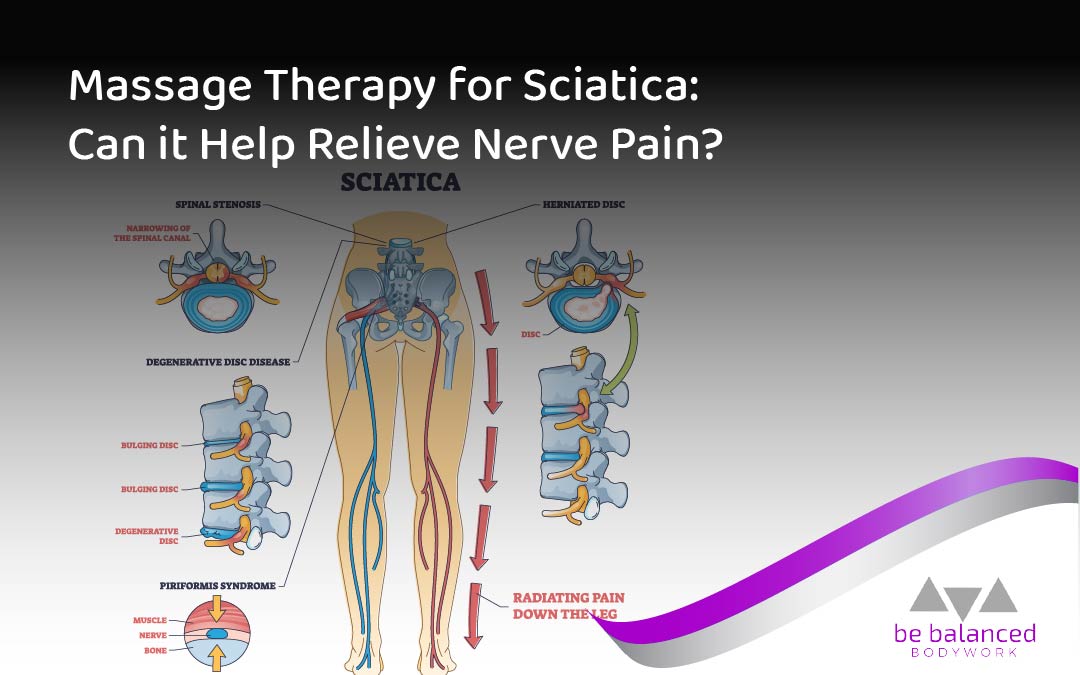
Sciatica refers to pain caused by irritation or compression of the sciatic nerve, the largest nerve in the body. The sciatic nerve travels from the lower back through the hips and buttocks and continues down each leg.
When this nerve becomes irritated or compressed, it can create symptoms such as:
- Burning or shooting pain
- Tingling sensations
- Numbness
- Muscle weakness
- Tightness or stiffness
Because the sciatic nerve affects multiple areas of the body, symptoms can vary in both intensity and location.
According to the Cleveland Clinic, common causes of sciatica include disc problems, spinal misalignment, inflammation, or tight surrounding muscles.
Because the sciatic nerve travels through multiple areas of the body, discomfort can vary from person to person. Some people feel pain mostly in the lower back, while others experience symptoms deep in the hips, glutes, or legs.
How Sciatic Pain Affects Daily Movement
One of the hardest parts of sciatica is how quickly it can interfere with everyday movement.
When the body experiences nerve irritation, surrounding muscles often tighten in response. This muscle guarding increases pressure around the sciatic nerve, worsening discomfort and make movement feel even more restricted.
Sciatic pain often becomes worse with:
- Long periods of sitting
- Standing for extended periods
- Walking long distances
- Repetitive bending or twisting
Over time, the body may begin compensating by overusing other muscle groups. This can create additional tension in the hips, lower back, or shoulders and lead to broader movement issues throughout the body.
Many people seeking nerve pain relief or muscle tension relief are surprised to learn how interconnected these tension patterns can become.
How Massage Therapy May Help Relieve Sciatica Pain

Massage therapy focuses on releasing tension, improving circulation, and helping muscles relax– all of which may help reduce pressure around the sciatic nerve.
This is where massage therapy can support both pain relief and improved mobility.
Massage May Help By:
- Releasing tight muscles surrounding the nerve
- Improving blood flow and oxygen delivery
- Reducing chronic tension patterns
- Encouraging better mobility and movement
- Supporting overall relaxation and stress reduction
When muscles in the lower back, hips, and glutes relax, pressure on the nerve may decrease, helping improve comfort and flexibility.
Massage therapy also supports circulation, which helps deliver nutrients and oxygen to affected tissues. Improved circulation may reduce stiffness and support the body’s natural recovery process.
For many people, massage therapy for sciatica becomes an important part of managing flare-ups and improving overall movement quality.
Myofascial Release and Deep Tissue Benefits
Certain massage techniques are especially beneficial for people dealing with sciatic discomfort.
Myofascial Release
Myofascial release focuses on the fascia– the connective tissue surrounding muscles. When fascia becomes restricted, it can contribute to tightness, pain, and limited mobility.
This technique helps:
- Reduce connective tissue restrictions
- Improve movement patterns
- Ease tightness around the hips and lower back
- Support overall flexibility
Deep Tissue Massage
Deep tissue therapy targets works into deeper layers of muscle tissue to address chronic tension and muscle guarding patterns.
This can help:
- Release tight glute and hip muscles
- Improve lower back mobility
- Reduce nerve compression
- Support long-term muscle balance
To learn more about how this approach may help, blog on myofascial release here.
When combined thoughtfully, these techniques can provide meaningful muscle tension relief while supporting better day-to-day movement.
What to Expect During a Sciatica Massage Session
If you’ve never had massage therapy specifically for sciatica before, you may wonder what a session actually looks like.
Understanding what happens during a session like this can help you feel more comfortable before getting started.
At Be Balanced Bodywork, sessions are always tailored to your comfort level, pain patterns, and movement limitations.
Your therapist may begin by assessing:
- Posture and alignment
- Pain location and severity
- Areas of tightness or compensation
- Movement restrictions
From there, treatment often focuses on:
- Lower back muscles
- Glutes and hips
- Hamstrings
- Supporting muscles surrounding the sciatic pathway
Depending on your needs, techniques may include:
- Deep tissue massage
- Trigger point therapy
- Gentle stretching
- Myofascial release
- Relaxation-focused bodywork
The pressure and techniques used are always adjusted based on sensitivity levels and your body’s response throughout the session.
Because sciatica affects everyone differently, personalized care is especially important.
When Massage Is Most Effective for Sciatica
Massage therapy tends to work best when used consistently and combined with healthy movement habits.
It may be especially effective for:
- Recurring tightness or flare-ups
- Stress-related muscle tension
- Postural strain from sitting
- Chronic muscle guarding patterns
Massage often works even better when paired with:
- Stretching
- Gentle movement
- Physical therapy exercises
- Daily mobility work
According to WebMD, movement and stretching are often recommended as part of sciatica management because staying too inactive may increase stiffness and discomfort.
Massage supports these efforts by helping the body move more comfortably and efficiently. Many clients find that everyday activities feel easier after tension begins to release.
The Role of Stress in Sciatic Pain
One thing many people overlook is how much stress contributes to physical tension.
When stress levels rise, muscles naturally tighten– especially in the neck, shoulders, lower back, and hips. This increased tension can intensify discomfort around the sciatic nerve and make flare-ups feel worse.
Massage therapy supports the nervous system by encouraging relaxation and helping the body shift out of “fight-or-flight” mode. As stress levels decrease, muscles become more receptive to release and movement often feels less restricted.
This is one reason why many people experience both physical and emotional relief after massage sessions.
Creating a Long-Term Plan for Relief
Sciatica often requires consistency rather than a one-time solution.
A long-term plan may include:
- Regular massage therapy
- Stretching and mobility work
- Ergonomic adjustments
- Stress management
- Movement throughout the day
For some people, weekly sessions are helpful during flare-ups, while others maintain comfort with bi-weekly or monthly care.
The key is listening to your body and building a routine that supports both recovery and prevention.
Conclusion
Sciatica can be frustrating, painful, and disruptive– but it doesn’t have to control your life. Massage therapy offers a natural way to reduce muscle tension, ease pressure surrounding the sciatic nerve, and support better movement over time.
By improving circulation, reducing tightness, and helping the body relax, massage therapy for sciatica can become an important part of a long-term wellness and pain management plan.
You don’t have to let sciatica control your daily movement. If you’re looking for a natural way to manage built-up tension and discomfort, book your session at Be Balanced Bodywork today and take the next step toward better movement and relief.
FAQs
Q: Can massage therapy help sciatica pain?
A: Yes. Massage therapy may help reduce muscle tension and pressure around the sciatic nerve, improving comfort and mobility.
Q: What type of massage is best for sciatica?
A: Deep tissue massage and myofascial release are often highly effective for relieving tension and supporting movement.
Q: How often should I get massage therapy for sciatica?
A: Many people benefit from weekly or bi-weekly sessions, depending on the severity of symptoms and lifestyle factors.
Q: Can massage replace medical treatment?
A: No. Massage should be used as supportive care alongside medical advice and treatment recommendations when needed.