Nearly one-third of adults report waking up feeling tired even after getting what should be enough sleep. While many people assume the problem is simply not getting enough hours in bed, the reality is often more complicated. Sometimes the issue isn’t falling asleep or staying asleep– it’s whether your body is actually recovering while you sleep.
Ever wake up after a full night’s sleep and still feel stiff, sore, or physically drained? Your muscles may be holding onto more tension than you realize.
Many people focus on sleep duration when trying to feel more rested, but true recovery involves more than simply getting eight hours of sleep..
Your body needs time to repair muscles, restore physical balance, and release built-up tension from the day. When that recovery process is interrupted by chronic muscle tightness, soreness, or body stiffness, you can wake up feeling like you never fully rested at all.
This guide explores how your body recovers during sleep and how massage therapy may help support that process by relieving the muscle tension that often gets in the way. To understand how massage can help, it first helps to understand what recovery actually looks like inside the body.
Why Sleep Recovery Involves More Than Sleep Alone
When most people think about sleep, they think about feeling rested mentally. But while your mind is recovering, your body is working hard too.
During deeper stages of sleep, your body focuses on:
- Muscle repair
- Tissue recovery
- Hormonal regulation
- Cellular restoration
- Physical recovery from daily activities
Sleep recovery refers to the body’s ability to repair and restore itself overnight.
The challenge is that simply spending enough time asleep does not automatically mean your body is recovering efficiently. Several factors can interfere with that process, including ongoing muscle tension.
If your muscles remain tight, restricted, or overworked, your body may struggle to fully relax during sleep. Areas experiencing ongoing strain often experience reduced circulation and increased strain, making it harder for tissues to recover effectively.
This is one reason some people wake up feeling physically exhausted despite getting a full night’s sleep.
Your muscles, joints, and connective tissues need an opportunity to reset every night. When tension remains locked into the body, that process becomes less efficient.
How Muscle Tension Builds Throughout the Day

Most muscle tension doesn’t come from a single dramatic event. Instead, it accumulates gradually throughout the day.
Common contributors include:
- Desk work
- Phone use
- Driving
- Standing for long periods
- Repetitive movement patterns
- Poor posture
- Stress
You may not notice these small strains as they happen, but your body certainly does.
For example:
- Shoulders creep upward while working
- The neck tightens while looking at screens
- The lower back often becomes strained from prolonged sitting
- Hips become restricted from inactivity
By the time evening arrives, many people are carrying significant tension without realizing it.
The problem is that those tight, overworked muscles don’t simply relax once you climb into bed.
Muscles that remain tight and overworked throughout the night may continue limiting circulation and creating physical stress while you sleep. As a result, your body spends more energy managing tension and less energy recovering from it.
Common tension hotspots include:
- Neck
- Shoulders
- Upper back
- Lower back
- Hips
These areas often remain restricted long after the workday ends.
When Your Body Isn’t Physically Recovering Overnight
One of the clearest signs of poor recovery is waking up uncomfortable despite getting enough sleep.
Common signs include:
Morning Stiffness
You wake up feeling tight or restricted, especially in the neck, shoulders, hips, or lower back.
Persistent Muscle Soreness
You experience ongoing soreness even though you haven’t exercised heavily or performed physically demanding activities.
Feeling Physically Drained
Despite sleeping the recommended number of hours, your body still feels fatigued.
Reduced Mobility
Movements feel stiff or uncomfortable first thing in the morning.
These symptoms often suggest that your body is not fully releasing tension or restoring itself overnight.
When recovery becomes compromised, the effects tend to build over time.
What starts as mild stiffness may gradually turn into recurring discomfort, reduced mobility, and ongoing physical fatigue.
How Massage Therapy Supports Sleep Recovery
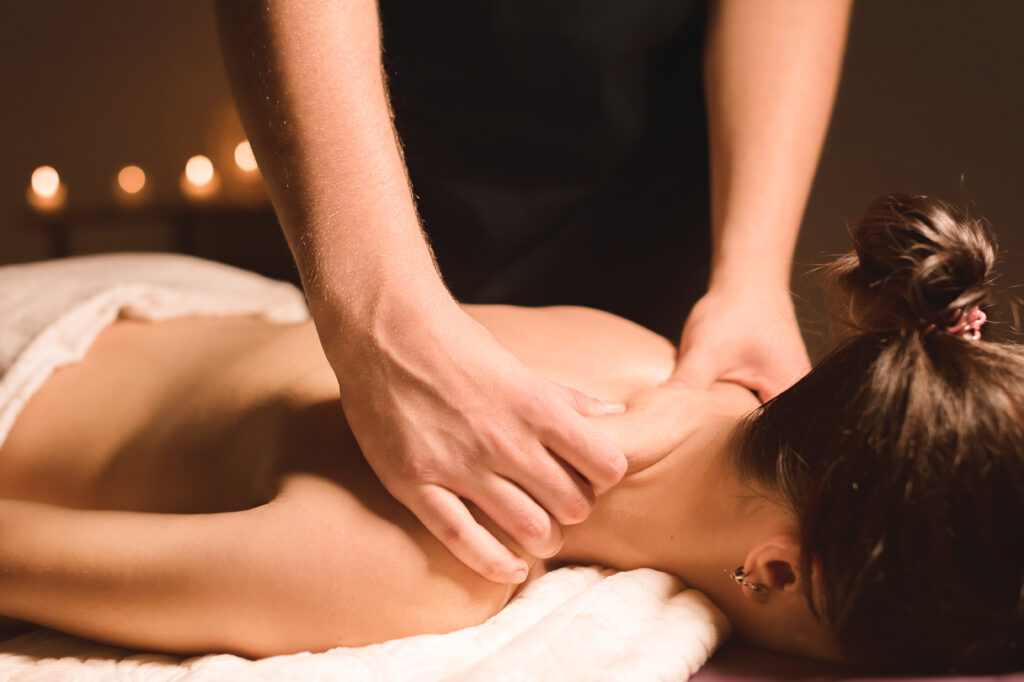
Fortunately, massage therapy supports recovery in several different ways.
First, it helps release chronic muscle tension that may be interfering with the body’s natural restoration process.
When muscles relax:
- Circulation improves
- Oxygen delivery increases
- Physical strain decreases
- Movement becomes easier
Massage can also help relieve the physical strain that builds throughout the day.
By improving blood flow and reducing tightness, massage helps create an environment where muscles can recover more effectively.
Research published through the National Institutes of Health has shown that massage can positively influence physiological recovery and relaxation processes.
Massage may also help reduce the physical burden of:
- Poor posture
- Repetitive movement
- Long workdays
- General muscle fatigue
This is why many people use massage therapy as part of their overall wellness and recovery routine.
For many people, it becomes a valuable tool for improving overall physical wellness and supporting better overnight recovery.
What Happens in the Body After Tension Is Released
When chronic tension begins to decrease, people often notice changes that extend far beyond the massage table.
Reduced Morning Stiffness
Relaxed muscles are less likely to feel restricted upon waking.
Greater Physical Comfort During Sleep
The body can settle into comfortable resting positions more easily.
Improved Alignment
When muscles aren’t constantly pulling on joints and connective tissues, posture often improves naturally.
Better Recovery
The body can dedicate more energy toward restoration rather than managing tension.
Many clients describe waking up feeling:
- Looser
- More mobile
- Less achy
- Better rested physically
These changes may seem subtle at first, but they often compound over time when tension patterns are consistently addressed.
Massage therapy can support both physical and mental well-being. To learn more, explore our guide on Health and Wellness Massage for Mental Health.
When Professional Bodywork Can Support Recovery
There are times when stretching, hydration, and rest simply aren’t enough.
Professional bodywork may be especially beneficial when:
- Tightness returns quickly
- Soreness persists despite rest
- Stiffness limits movement
- Recovery feels incomplete
- Daily activities continue creating strain
Massage therapists can identify areas of restriction that are difficult to address on your own.
Targeted bodywork helps:
- Release deeper layers of tension
- Improve circulation
- Restore mobility
- Reduce accumulated strain
Consistent sessions may also support better muscular balance over time, helping the body feel less restricted and more resilient.
This is particularly important for individuals whose work, lifestyle, or stress levels continually contribute to physical tension.
Creating a Better Environment for Recovery
Massage therapy works best when paired with healthy recovery habits.
To support overnight recovery:
- Stay hydrated
- Move regularly throughout the day
- Prioritize posture awareness
- Stretch gently before bed
- Maintain a consistent sleep schedule
These habits help reinforce the body’s natural ability to repair itself.
Combined with regular bodywork, they create a stronger foundation for long-term recovery and physical well-being.
Ready to Wake Up Feeling More Rested?
Sleep recovery isn’t just about how long you sleep– it’s about whether your body is able to fully relax, restore itself, and repair the physical stress it experiences throughout the day.
When muscle tension, soreness, and stiffness continue to build, they can interfere with that recovery process and leave you waking up feeling less than your best.
Massage therapy helps support recovery by releasing tension, improving circulation, and allowing your body to devote more energy to healing and restoration.
If you’re experiencing muscle tension, soreness, or poor physical recovery during sleep, our team here at Be Balanced Bodywork can help.
Contact us today to learn how massage therapy can support your body’s recovery beyond normal sleep and help you wake up feeling more refreshed, mobile, and comfortable.
FAQs
Q: What is sleep recovery in the body?
A: Sleep recovery is the body’s overnight process of repairing muscles, restoring tissues, and restoring tissues, and recovering from daily physical stress.
Q: Why do I wake up sore even after sleeping?
A: Muscle tension, stress, posture issues, and accumulated physical strain can interfere with overnight recovery and contribute to morning soreness.
Q: Can massage improve sleep recovery?
A: Yes. Massage helps release muscle tension, improve circulation, and support the body’s ability to recover more effectively during sleep.
Q: Is sleep recovery different from sleep quality?
A: Yes. Sleep quality focuses on how well you sleep, while sleep recovery focuses on how effectively your body restores and repairs itself during sleep.