
If you’re frequently rubbing your neck, rolling your shoulders, or stretching to relieve a headache, your body may be trying to tell you something.
For a lot of people, headaches and neck pain show up together. Maybe your neck feels tight after a long workday. Maybe your shoulders creep up toward your ears when you’re stressed. Or maybe your headache starts as a little pressure at the base of your skull and slowly builds from there.
Sound familiar? You’re not alone.
Here in Grand Rapids, plenty of people spend their days at desks, in cars, on phones, caring for families, working physical jobs, or carrying stress in ways they don’t always notice until the pain shows up. Over time, that tension can settle into the neck, shoulders, jaw, and upper back, and that can play a big role in recurring headaches.
This guide will walk through why headaches and neck discomfort often happen together, how massage therapy may help, and what simple habits can support relief between sessions.
Why Headaches and Neck Pain Often Occur Together

Your head, neck, shoulders, and upper back are all connected. When one area becomes tight, the others often have to work harder.
For example, if your shoulders are rounded forward from desk work, your neck muscles may have to work harder to support your head. If your jaw is clenched from stress, muscles around the temples and base of the skull may become more sensitive. If your upper back is tight, that tension can travel upward into the neck and head.
The areas most often involved are pretty familiar ones:
- The tops of your shoulders
- The base of your skull
- The sides and back of your neck
- Your jaw and temples
- The upper back between your shoulder blades
When these areas hold tension for too long, they may contribute to headache symptoms, especially tension-related headaches. The key is understanding that the pain you feel in your head may sometimes be influenced by tension patterns lower down in the neck, shoulders, or upper back.
Massage therapy may help by addressing the muscle tension underneath the discomfort, rather than only focusing on the headache itself.
WebMD notes that massage may support migraine and headache relief by helping with common triggers like stress, poor sleep, and muscle tightness.
Common Triggers Behind Tension Headaches
Tension headaches often build slowly. They may start as mild tightness in the shoulders or a dull ache at the base of the skull before turning into pressure around the head.
Common triggers include:
- Stress from work, family, or daily responsibilities
- Poor posture while sitting or standing
- Long hours at a desk or computer
- Looking down at your phone for long periods
- Clenching your jaw without realizing it
- Not getting enough quality sleep
- Repeating the same movements all day
- Carrying emotional stress in your body
Stress is one of the biggest contributors. When your body is under stress, your muscles often tighten automatically. Over time, that protective response can become a pattern your body repeats without you realizing it.
This is how stress headaches and neck discomfort often begin. The body holds tension in the neck, shoulders, jaw, or upper back, and that tension gradually contributes to pain or pressure around the head.
Some chronic headache causes are medical and should be evaluated by a healthcare provider, especially if symptoms are severe, sudden, or changing. But for many people, recurring headaches also have a muscular component. Tight neck muscles, shoulder tension, and upper back strain may all contribute to how often headaches appear and how intense they feel.
That’s why it can be helpful to look beyond the headache itself and ask: where is my body holding tension?
How Massage Can Help Relieve Pain
Massage therapy helps release muscle tension, improve circulation, and calm the nervous system. For people dealing with headaches and neck pain, that combination can be especially helpful.
Massage can support relief by:
- Loosening tight neck and shoulder muscles
- Reducing pressure near the base of the skull
- Improving blood flow to tense areas
- Supporting the body’s relaxation response
- Supporting better posture and easier movement
- Helping you notice where your body holds tension
Many people also find that massage gives them a chance to fully relax in a way they may not be able to during a busy day. That relaxed state can make it easier for the body to let go of tension that has been building for hours, days, or even weeks.
A University of Miami study found that people receiving massage therapy for migraines reported fewer distress symptoms, less pain, more headache-free days, and fewer sleep disturbances. You can view that study here.
Of course, massage therapy is not a replacement for medical care. But for people dealing with recurring tension, stress-related headaches, or neck and shoulder tightness, massage can be a supportive part of a broader wellness routine.
Areas Massage Therapists Commonly Focus On
When you come in for headache or neck discomfort, your therapist will usually look at more than just the exact spot that hurts.
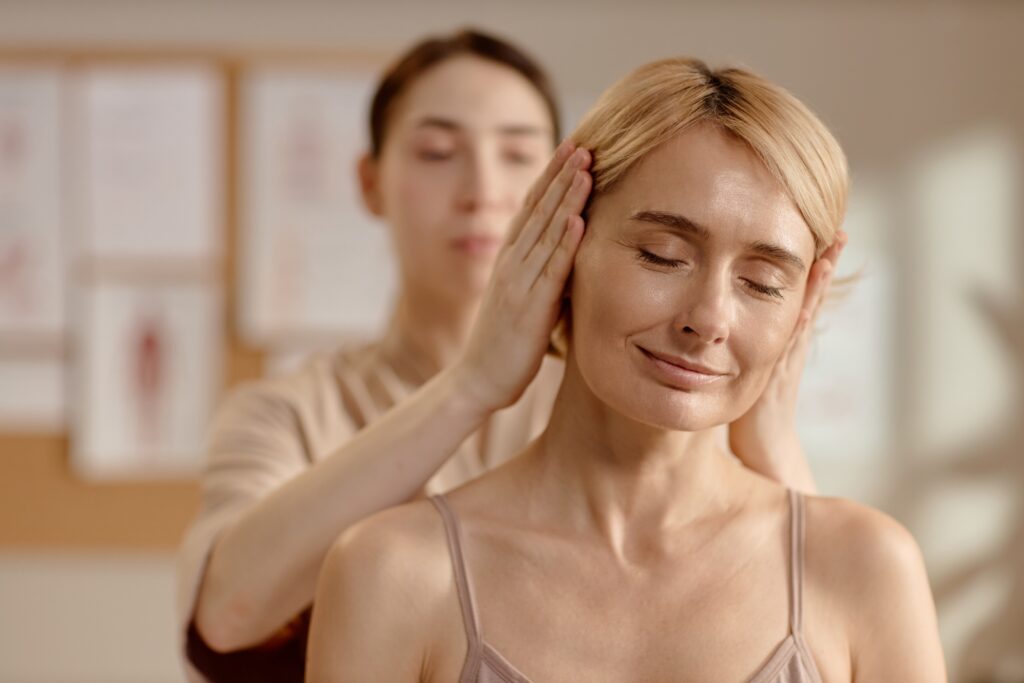
That’s because pain often has a ripple effect. Tight shoulders can affect the neck. A tight neck can affect the base of the skull. Jaw tension can affect the temples. Upper back tension can make the whole area feel restricted.
A massage therapist may focus on:
- The neck
- The upper shoulders
- The upper back
- The base of the skull
- The jaw or temples, when appropriate
Releasing neck and shoulder tension can help the whole upper body feel more open and relaxed.
Each session is tailored to your needs. Some people need gentle, calming work because their nervous system is already overwhelmed. Others benefit from more focused therapeutic pressure in specific areas.
A good massage therapist will check in, adjust pressure as needed, and work with your comfort level.
Massage should not involve pushing through pain. The goal is to help your body feel safe enough to release.
Simple Habits That May Help Reduce Daily Tension
Massage can do a lot, but what you do between sessions matters too.
Small daily habits can help keep tension from building so quickly, especially if you work at a desk or spend a lot of time on your phone.
A few simple habits to try:
- Stand up and move every 30 to 60 minutes
- Keep your screen closer to eye level
- Let your shoulders drop when you notice them creeping up
- Unclench your jaw a few times throughout the day
- Take a few slow breaths when stress builds
- Stretch your neck and shoulders gently
- Drink enough water throughout the day
Small adjustments can add up over time. The goal is not to be perfect. It is simply to give your body more chances to relax before tension turns into pain.
Curious about how stress affects your muscles? Explore our guide on how stress physically causes muscle tension and how massage may help,
Lasting relief usually depends on consistency, not intensity.
Supporting Long-Term Relief Beyond Massage Therapy
Long-term relief often comes from a mix of massage, movement, posture awareness, and regular self-care.
That doesn’t mean you need to completely overhaul your life. You don’t need a perfect morning routine or an hour of stretching every night. Start small.
Helpful long-term habits include:
- Taking regular movement breaks
- Stretching gently throughout the week
- Paying attention to posture during desk work
- Strengthening your upper back and core when appropriate
- Managing stress before it builds too high
- Scheduling massage consistently instead of waiting until pain is severe
Staying active can also help. Movement keeps blood flowing, supports mobility, and prevents tension from settling into the same places again and again.
If you want simple movement ideas, we also have a helpful guide on physical therapy exercises you can try at home.
Gentle exercises like Cat-Cow, Bird-Dog, and Reclined Spinal Twist may help support mobility and complement massage therapy between sessions.
If your headaches or neck pain keep coming back, that doesn’t mean you’re doing something wrong. It may simply mean your body needs more consistent support. Chronic tension patterns often build slowly, so they usually release more effectively with regular care.
Massage helps loosen the tension. Daily habits help keep it from coming right back.
When to Seek Professional Help for Headaches and Neck Pain
Massage therapy can be helpful, but it’s also important to know when to check in with a healthcare provider.
You should seek medical advice if your headaches are:
- Sudden or severe
- Getting worse over time
- Changing in pattern or intensity
- Happening more often than usual
- Paired with dizziness, vision changes, confusion, or weakness
- Showing up after an injury or accident
- Not improving with rest, hydration, or conservative care
Massage therapy can support comfort and wellness, but it should not replace medical evaluation when symptoms are unusual or concerning.
At Be Balanced Bodywork, the goal is always to support you safely. That means listening to what you’re experiencing, adjusting each session to your needs, and encouraging additional care when it makes sense.
Let Us Help with Headache and Neck Pain Relief
Headaches and neck pain are often connected through muscle tension, stress, posture habits, and everyday movement patterns.
When the neck, shoulders, jaw, or upper back stay tight for too long, that tension can travel upward and contribute to recurring headaches.
Massage therapy may be just what you need to truly help by releasing tight muscles, improving circulation, calming stress-related tension, and supporting better overall comfort.
When this precise, professional help is paired with simple daily habits like movement breaks, posture awareness, and gentle stretching, it can become a meaningful part of your long-term wellness routine.
If headaches and neck pain keep returning, consistent support may help create lasting relief. You don’t need to power through it. Contact our team here at Be Balanced Bodywork today to learn how massage therapy can help relieve nagging headaches and neck pain, and support your overall well-being.
FAQs
Q: Why do headaches and neck pain often occur together?
A: Tight muscles in the neck, shoulders, and upper back can contribute to discomfort that may be felt in both the neck and head.
Q: Can stress cause headaches and neck pain?
A: Yes. Stress can contribute to muscle tension, which may increase the likelihood of headaches, neck discomfort, and shoulder tightness.
Q: Can massage therapy help with tension headaches?
A: Massage may help reduce tension in the neck, shoulders, and upper back, which can support relief for some people with tension-related headaches.
Q: How often should I get a massage for headaches and neck pain?
A: The ideal frequency varies by individual needs, symptoms, and wellness goals. A massage therapist can help recommend an appropriate schedule based on what you are looking for.