If you hear the words “lymphatic drainage,” you might picture a massage designed to push fluid around the body.
The reality is much more precise– and much gentler.
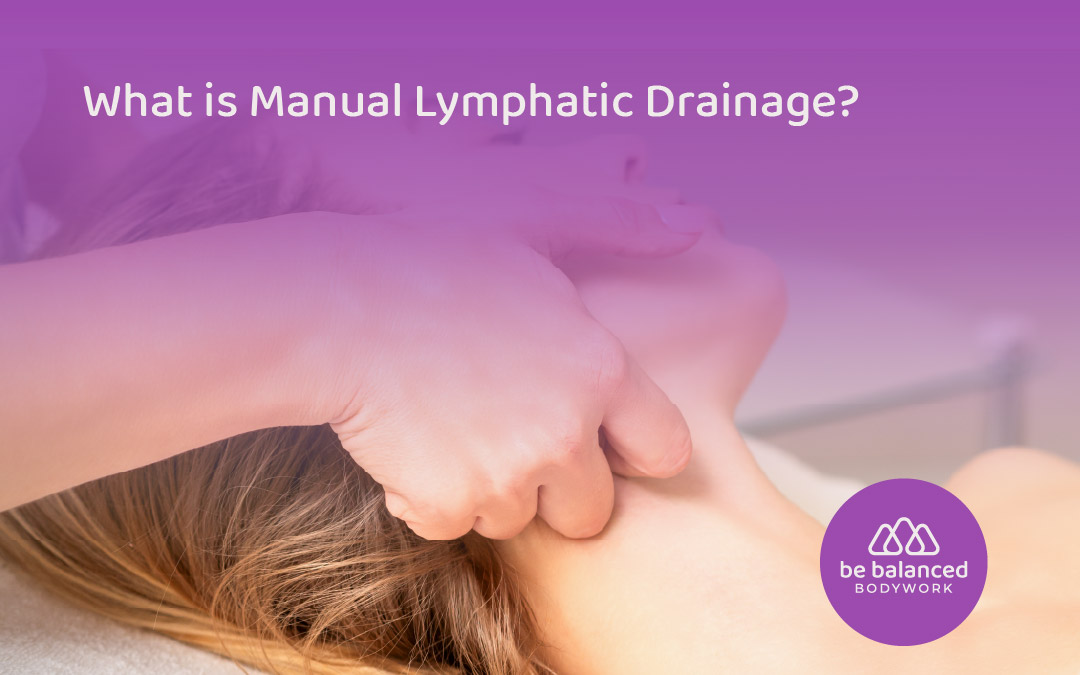
Manual lymphatic drainage, often shortened to MLD, is a specialized form of manual therapy designed to encourage lymph fluid movement through the lymphatic system. Unlike a traditional massage, it does not rely on deep pressure, kneading, or working into sore muscles.
In fact, when MLD is performed correctly, the pressure can feel surprisingly light.
That is because the goal is different.
A traditional therapeutic massage may focus on skeletal muscles, knots, tension, and soreness. Manual lymphatic drainage works much closer to the surface of the body using carefully sequenced, rhythmic movements intended to support lymph flow.
Here at Be Balanced Bodywork in Grand Rapids, we think understanding that the difference is especially important for clients considering MLD for swelling after surgery, lymphedema, or another medically related concern.
So, what is manual lymphatic drainage, how does it work, and who might benefit from it?
Let’s break it down without making it more complicated than it needs to be.
What Is the Lymphatic System?
Before we talk about MLD, it helps to understand what the lymphatic system actually does.
Your lymphatic system is a network of:
- Lymph vessels
- Lymph nodes
- Lymph fluid
- Lymphatic organs and tissues
It works alongside your circulatory and immune systems.
As blood circulates through the body, some fluid naturally moves out of blood vessels and into surrounding tissues. Much of that fluid eventually needs to make its way back into circulation.
That is where the lymphatic system helps.
Tiny lymphatic vessels collect excess fluid from the tissues. That fluid– now called lymph– travels through larger lymphatic vessels and lymph nodes before eventually returning to the bloodstream.
Along the way, lymph nodes help filter the fluid and support immune surveillance.
The lymphatic system therefore helps manage:
- Tissue fluid balance
- Proteins and cellular debris in tissue fluid
- Immune-system activity
- Transport of certain fats from the digestive system
Unlike your bloodstream, the lymphatic system does not have one large central pump like the heart.
Instead, lymph movement is supported by several things, including:
- Contractions of lymphatic vessels
- Skeletal muscle movement
- Breathing
- Changes in pressure inside the body
- Movement during daily activity
Usually, this system works quietly in the background without you ever thinking about it.
Problems become more noticeable when lymph cannot move normally and excess fluid begins collecting in the tissues.
What Happens When Lymph Fluid Builds Up?
When lymphatic drainage is impaired, fluid can accumulate in the tissues and cause swelling.
This swelling is called edema.
When swelling results specifically from a problem with the lymphatic system, it may be called lymphedema.
Lymphedema can develop for different reasons.
Some people are born with lymphatic abnormalities. This is called primary lymphedema.
Others develop secondary lymphedema following causes such as:
- Lymph-node removal
- Cancer treatment
- Radiation
- Surgery
- Injury
- Infection
- Damage to lymphatic vessels
People with lymphedema may experience:
- Swelling
- Heaviness
- Tightness
- Reduced movement
- Changes in skin texture
- Difficulty fitting into clothing or shoes
- Discomfort in the affected area
Not every swollen ankle or puffy area is lymphedema, though.
Swelling can also be caused by heart problems, kidney disease, blood clots, venous conditions, medication, injury, infection, and other medical concerns.
That distinction matters because you should understand why swelling is happening before deciding that lymphatic drainage is the right treatment.
How Is Manual Lymphatic Drainage Different From Massage?
People often search for lymphatic massage, so you will frequently see MLD described as a type of massage.
But clinically, manual lymphatic drainage is different from conventional massage therapy.
Traditional massage often works with skeletal muscle.
That may involve:
- Kneading
- Compression
- Friction
- Broad strokes
- Trigger-point work
- Deep pressure
MLD uses a much lighter and more regimented approach.
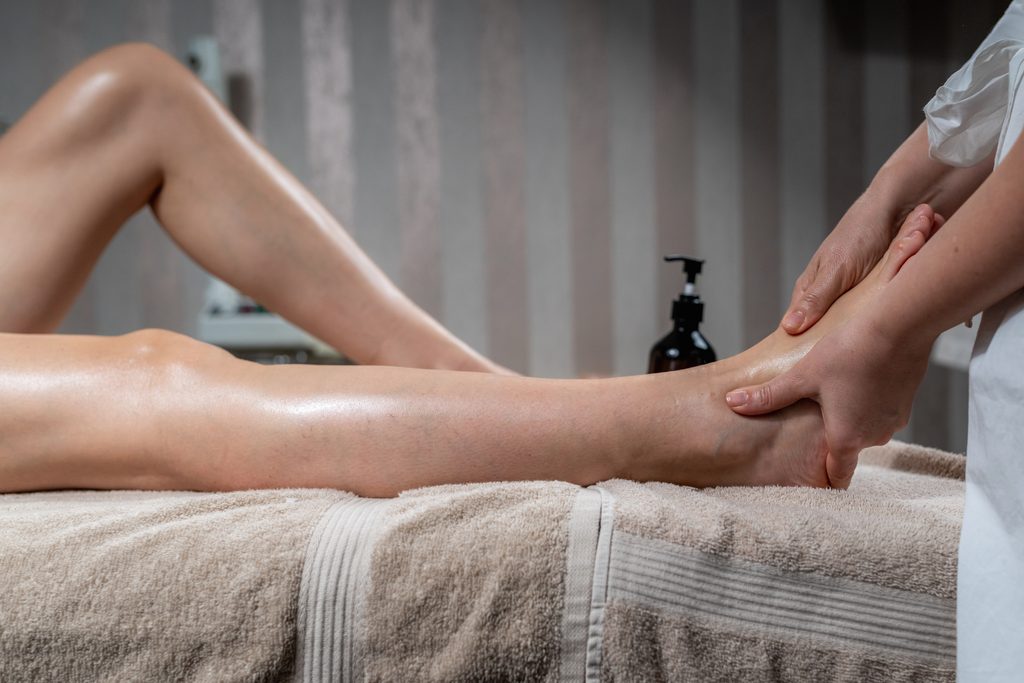
Rather than trying to reach deep muscle tissue, the therapist uses gentle movements that stretch and release the skin.
The pressure is carefully controlled because many of the lymphatic vessels involved in fluid collection are very close to the skin’s surface.
This is one of the biggest surprises for first-time MLD clients.
People sometimes assume:
“If I’m swollen, shouldn’t the therapist push harder to move the fluid?”
Usually, no.
Heavy pressure can compress superficial lymphatic structures rather than help them work.
MLD relies on precision, rhythm, sequencing, and anatomy– not force.
Why Is the Pressure So Light?
Part of the answer has to do with how lymphatic vessels work.
The walls of collecting lymphatic vessels contain smooth muscle. Smooth muscle works involuntarily, meaning you do not consciously tell it when to contract.
That is different from the skeletal muscles you use to move your arms, legs, back, and other parts of your body.
For clarity, there are three major types of muscle tissue in the human body:
- Skeletal muscle, which creates voluntary body movement
- Smooth muscle, found in structures such as the intestines, blood vessels, and lymphatic vessels
- Cardiac muscle, which makes up the heart
The lymphatic vessels can rhythmically contract to help propel lymph forward.
One goal of MLD is to work with that natural physiology through light, rhythmic skin movements rather than overwhelming the tissues with pressure.
That is why a properly performed session may feel more like gentle skin stretching than the massage techniques you may be used to.
What Is the Vodder Method?
There are several approaches to manual lymphatic drainage, but the Vodder Method is one of the best-known.
Dr. Emil Vodder and Estrid Vodder developed their approach to manual lymph drainage in Europe during the 1930s.
The technique eventually became part of what is now commonly called Complete Decongestive Therapy, or CDT, for lymphedema.
Vodder-style MLD follows specific principles involving:
- Very light pressure
- Rhythmic movements
- Skin stretching rather than sliding
- Anatomically based sequences
- Careful direction of fluid movement
- Specialized therapist training
This is one reason MLD should not simply be treated as “a light massage.”
A trained practitioner is following a specific system based on lymphatic anatomy and fluid pathways.
What Happens During a Manual Lymphatic Drainage Session?
The details of a session depend on why you are receiving MLD and which areas need attention.
For someone with a medical condition such as lymphedema, treatment should be based on appropriate clinical guidance.
A session often begins with a conversation.
Your therapist may ask about:
- Why you are seeking MLD
- Previous surgeries
- Cancer treatment history
- Swelling
- Injuries
- Medications
- Medical conditions
- Recent procedures
- Your healthcare provider’s recommendations
This information matters because fluid buildup can have several causes, and MLD is not appropriate in every situation.
Treatment Often Starts Away From the Swelling
This can seem counterintuitive.
If your lower leg is swollen, for example, you might expect the therapist to start working directly on the swollen area.
MLD often begins more centrally, depending on the treatment plan.
The therapist may first work around areas such as:
- The neck
- Collarbone region
- Trunk
- Groin
- Healthy lymph-node regions
The idea is to encourage drainage through available lymphatic pathways before directing additional fluid along those pathways.
From there, treatment progresses in a carefully planned sequence.
The therapist uses repeated, rhythmic movements to stretch the skin and encourage fluid movement toward functioning lymph vessels and lymph nodes.
What Does Manual Lymphatic Drainage Feel Like?
MLD should generally feel gentle.
Many clients describe it as:
- Light
- Rhythmic
- Relaxing
- Repetitive
- Calming
If you are accustomed to deep tissue massage, MLD may initially feel almost too gentle.
That does not mean nothing is happening.
The technique is intentionally designed to work with superficial tissues and lymphatic structures.
You generally should not expect:
- Deep kneading
- Hard pressure
- Aggressive muscle work
- Painful trigger-point techniques
- Forceful pushing on swollen tissue
If your goal is deep therapeutic massage for muscle tension, another service may be more appropriate.
If your goal involves lymphatic fluid movement, MLD is a distinctly different tool.
Does Research Show That MLD Can Increase Lymph Flow?
Researchers have used imaging technology to actually observe lymphatic movement before and after manual lymphatic drainage.
One particularly interesting study was published in the Archives of Physical Medicine and Rehabilitation in 2011.
Researchers used near-infrared fluorescence imaging to study lymphatic function in people with mild-to-moderate lymphedema as well as healthy participants.
After MLD, the researchers observed increases in average apparent lymph velocity:
- About 23% in symptomatic limbs
- About 25% in asymptomatic limbs of people with lymphedema
- About 28% in healthy control limbs
The intervals between lymphatic propulsion events also became shorter in several groups.
The researchers described the study as exploratory, so the results should not be treated as proof that every person will respond the same way.
Still, the study is important because it allowed researchers to visualize immediate changes in lymphatic contractile activity following MLD.
Research into MLD continues, and questions remain about exactly which patients benefit most and how much MLD adds when compared with other components of treatment.
That is especially important when we talk about lymphedema.
Manual Lymphatic Drainage and Lymphedema
MLD is often used as one part of Complete Decongestive Therapy, commonly called CDT.
For lymphedema, CDT may include:
- Manual lymphatic drainage
- Compression bandaging
- Compression garments
- Exercise
- Skin care
- Patient education
This combination matters.
MLD is not necessarily intended to do all the work by itself.
Compression can help prevent fluid from immediately accumulating again. Exercise can support lymph movement through muscle activity. Skin care helps lower infection risk.
The National Cancer Institute includes manual lymphatic drainage as part of complete decongestive therapy for managing lymphedema.
That is a more accurate way to think about the benefits of lymphatic drainage in a clinical setting: as one piece of a larger management strategy.
Can MLD Help With Swelling After Surgery?
Swelling after surgery is one of the most common reasons people become curious about lymphatic drainage.
Some post-operative care plans include MLD to help manage swelling and fluid accumulation.
However, timing matters.
You should not schedule MLD immediately after surgery without first discussing it with the appropriate healthcare professional.
Different surgeries have different:
- Healing timelines
- Incisions
- Infection risks
- Blood-clot risks
- Restrictions
- Compression requirements
If your surgeon recommends MLD, let us know:
- What procedure you had
- When it was performed
- Where the incisions are
- What restrictions you have
- Whether compression is being used
- What your surgeon has cleared you to do
Post-operative MLD should support your recovery plan– not work against it.
How Long Does a Manual Lymphatic Drainage Session Last?
The length depends on:
- Your treatment goals
- The area being addressed
- Your health history
- Whether the session is medical or wellness-focused
- Your individual treatment plan
Sessions may range from around 30 minutes to an hour or longer depending on the circumstances.
Here at Be Balanced Bodywork, we offer several session lengths for our Manual Lymphatic Drainage service so care can be personalized around the client’s needs.
If you are unsure where to start, talk with us before booking.
We can help you understand what information we need and whether medical clearance is appropriate.
Who May Benefit From Manual Lymphatic Drainage?
MLD may be considered in situations involving:
- Diagnosed lymphedema
- Certain types of post-operative swelling
- Some injury-related swelling
- Fluid retention associated with specific conditions
- Recovery plans where a healthcare professional has recommended lymphatic treatment
It may also be included in rehabilitation programs after certain cancer treatments involving lymph-node removal or radiation.
However, having swelling does not automatically mean MLD is appropriate.
The cause should come first.
That is why qualified assessment matters.
Who Should Avoid Manual Lymphatic Drainage?
Because MLD changes the movement of fluid through the body, there are circumstances where treatment may be unsafe or require medical clearance.
Do not assume that a gentle technique is automatically harmless.
MLD may need to be avoided, postponed, or medically cleared if you have:
- An active infection
- Fever
- Cellulitis
- A known or suspected blood clot
- Deep vein thrombosis
- Unstable or untreated heart failure
- Serious kidney problems affecting fluid balance
- Unexplained swelling
- Certain acute medical conditions
If you are currently being treated for cancer, have a complicated medical history, or recently had surgery, talk with your healthcare team before beginning MLD.
It is worth noting that manual lymphatic drainage is routinely used as part of treatment for some cancer-related lymphedema, so a history of cancer does not automatically mean you cannot receive MLD.
The details of your situation matter.
When Swelling Needs Medical Evaluation First
Swelling is not something you should always try to manage with bodywork.
Seek prompt medical attention if swelling is:
- Sudden
- Severe
- Only on one side without explanation
- Red or hot
- Painful
- Accompanied by fever
- Associated with shortness of breath
- Associated with chest pain
- Following a major injury
- Rapidly worsening
A swollen leg, for example, could represent something very different from lymphedema.
It may involve:
- A blood clot
- Infection
- Venous problems
- Injury
- Heart or kidney issues
MLD is a specialized form of manual therapy, not a diagnostic test.
Knowing what is causing your swelling is an important first step.
Manual Lymphatic Drainage vs. Traditional Massage
If you are trying to decide between MLD and a massage, ask yourself what your primary goal is.
Traditional massage may make more sense when your goal is:
- Muscle tension relief
- Relaxation
- Working on sore muscles
- Trigger-point work
- Deep tissue care
- General physical recovery
Manual lymphatic drainage may make more sense when your goal involves:
- Lymphatic fluid movement
- Lymphedema management
- Medically appropriate post-operative swelling
- A care plan specifically involving lymphatic drainage
The two services may exist under the same wellness roof, but they should not be treated as interchangeable.
Traditional massage works primarily with muscles and soft tissue.
MLD follows the anatomy and physiology of the lymphatic system.
That difference is important.
Finding Manual Lymphatic Drainage in Grand Rapids
If you are considering MLD, look for someone with training specific to manual lymphatic drainage rather than assuming every massage therapist provides the same treatment.
Ask questions.
You may want to know:
- What MLD training has the practitioner completed?
- Which method do they use?
- Do they work with post-operative clients?
- Do they work with diagnosed lymphedema?
- When do they require medical clearance?
- How long should your session be?
- Should MLD be combined with compression or another treatment?
Here at Be Balanced Bodywork, our goal is to make sure the service fits each client’s needs.
That may mean booking MLD.
It may mean choosing a traditional massage instead.
And sometimes it may mean talking with your healthcare provider before scheduling anything at all.
That is part of providing responsible care.
A Gentler Technique With a Very Specific Purpose
Manual lymphatic drainage can look deceptively simple.
The pressure is light. The movements are slow and rhythmic. The session may feel deeply relaxing.
But beneath that gentle approach is a very specific purpose.
MLD is designed around lymphatic anatomy, fluid movement, and carefully sequenced skin-stretching techniques rather than conventional muscle manipulation.
Research has shown that MLD can produce immediate changes in lymphatic contractile activity in some people, and it remains an established component of complete decongestive therapy for lymphedema.
At the same time, it is not the right treatment for every type of swelling or every medical condition.
Understanding the difference is what helps make the treatment useful and safe.
Curious Whether Manual Lymphatic Drainage Is Right for You?
If swelling, post-surgical recovery, or a diagnosed lymphatic condition has you wondering whether MLD belongs in your care plan, you do not have to figure it out alone.
Here at Be Balanced Bodywork, we offer specialized Manual Lymphatic Drainage in Grand Rapids using the gentle, precise approach this type of therapy requires.
Reach out to our team to tell us what you are experiencing, ask questions, or learn whether MLD may be appropriate for your situation. When medical clearance is needed, we’ll encourage you to involve your healthcare provider so your care stays safe, informed, and centered around what your body actually needs.
FAQs About Manual Lymphatic Drainage
Q: What is manual lymphatic drainage?
A: Manual lymphatic drainage is a specialized form of gentle manual therapy designed to encourage lymph fluid movement. It uses light, rhythmic skin-stretching techniques rather than the deeper pressure typically associated with massage.
Q: Is manual lymphatic drainage the same as massage?
A: Not exactly. Although MLD is often called lymphatic massage, it follows specialized lymphatic techniques and uses much lighter pressure than conventional massage therapy. Traditional massage primarily works with muscles and other soft tissues, while MLD is designed around lymphatic fluid movement.
Q: Can manual lymphatic drainage help swelling after surgery?
A: It may be included in some post-operative recovery plans, but the timing and appropriateness depend on the procedure and your health. Always follow your surgeon’s guidance and tell your MLD practitioner about recent surgery before treatment.
Q: What does manual lymphatic drainage feel like?
A: MLD is generally very gentle and rhythmic. Many people find it relaxing. You should not expect deep pressure, intense kneading, or painful work.
Q: Who should not receive manual lymphatic drainage?
A: MLD may not be appropriate if you have an active infection, fever, known or suspected blood clot, unstable heart failure, serious kidney problems, unexplained swelling, or certain other medical conditions. When in doubt, speak with your healthcare provider before receiving treatment.