If heel pain is making those first few steps each morning uncomfortable, you’re not alone.
Around one in ten people will experience plantar fasciitis at some point in their lives.
It can affect anyone from runners and professional athletes to teachers, healthcare workers, factory employees, and people who simply spend most of the day on their feet.
In 2024, plantar fasciitis sidelined Minnesota Twins All-Star Carlos Correa for 51 games. While most of us aren’t playing professional baseball, the condition can still interfere with the activities you enjoy.
Even a short walk through the neighborhood, a shift at work, or those first few steps out of bed can become surprisingly painful.
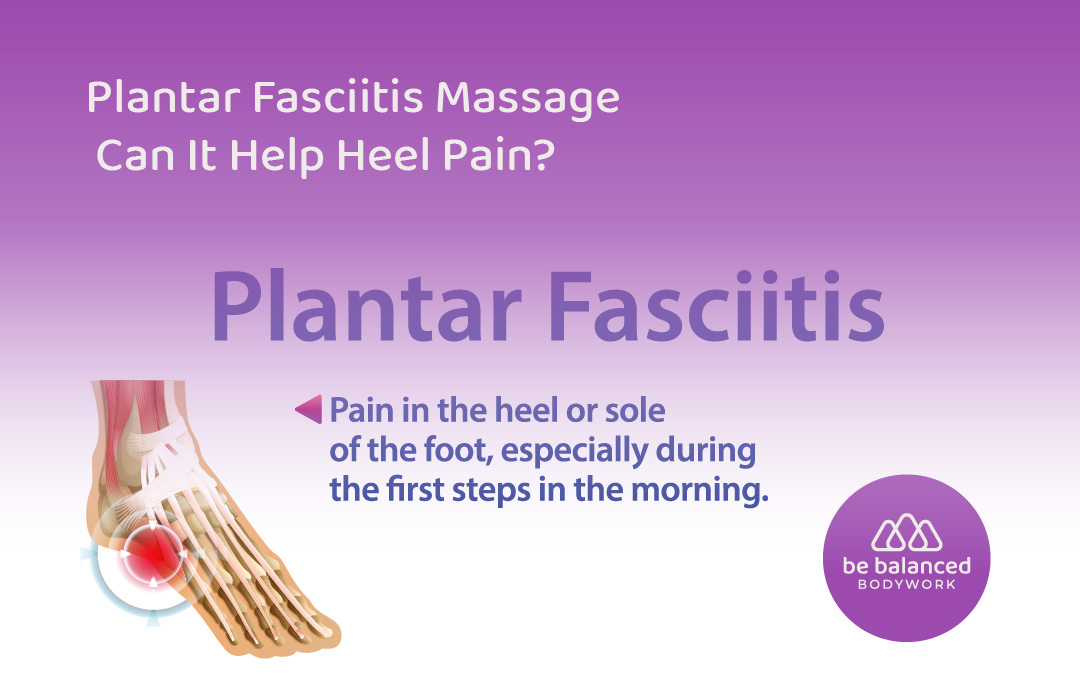
Plantar fasciitis is one of the most common causes of heel pain. It develops when the thick band of tissue running along the bottom of your foot becomes irritated or overstressed. The pain can be sharp, persistent, and difficult to ignore.
The good news is that most cases improve with conservative care. Rest, stretching, supportive footwear, activity changes, and professional guidance can all play a role.
Massage may also provide useful support by easing tension in the foot and calf, improving comfort, and helping you move more naturally.
This guide explains what causes plantar fasciitis, how massage may help, how to safely try self-massage at home, and how to tell when heel pain might be related to something else– such as tarsal tunnel syndrome or a heel spur.
What Is Plantar Fasciitis?
The plantar fascia is a strong band of tissue that runs from your heel toward the front of your foot. It helps support your arch and absorbs some of the force created when you walk, run, or stand.
Plantar fasciitis develops when that tissue is exposed to more stress than it can comfortably handle. Small areas of irritation can build over time, eventually making it painful to place weight on the foot.
Common symptoms include:
- Pain near the bottom of the heel
- Tenderness along the arch
- Sharp pain with the first steps in the morning
- Pain after sitting or resting for a long time
- Discomfort after exercise or prolonged standing
- A tight feeling through the arch or Achilles tendon
That “first step” pain is one of the condition’s most recognizable signs. Your foot may loosen up after walking for a few minutes, only for the discomfort to return later after activity or another period of rest.
According to the Cleveland Clinic, plantar fasciitis is the most common cause of heel pain and affects more than two million people in the United States each year.
What Causes Plantar Fasciitis?
Plantar fasciitis usually develops gradually rather than following one obvious injury. Several small factors may combine until the fascia can no longer comfortably manage the load placed on it.
Common contributors include:
- Long-distance running or repetitive impact
- A sudden increase in exercise
- Standing for long periods
- Working or exercising on hard surfaces
- Tight calf muscles
- A tight Achilles tendon
- Flat feet or very high arches
- Shoes without enough cushioning or arch support
- Changes in body weight
- Walking barefoot on hard floors
- Limited recovery between activities
Age may also play a role. Plantar fasciitis is especially common between ages 40 and 60, although younger adults can develop it too.
Here in Grand Rapids, the condition can affect people across many different lifestyles.
A healthcare worker standing through a long shift, a factory employee working on concrete, a teacher moving around a classroom, or a runner increasing mileage when the weather warms up may all place repeated strain on the plantar fascia.
It is not only an athlete’s problem.
Can Massage Help Plantar Fasciitis?
Massage cannot cure plantar fasciitis by itself, but it may be a helpful part of a broader treatment plan.
The plantar fascia does not work alone. Its function is influenced by the muscles of the foot, calf, ankle, and lower leg. If those surrounding tissues are tight or overworked, they may place additional strain on the bottom of the foot.
Massage for plantar fasciitis may help by:
- Easing tension in the calf muscles
- Relaxing tight tissue through the arch
- Supporting comfortable ankle movement
- Reducing muscle guarding around the painful area
- Improving short-term comfort
- Making stretching and movement feel easier
Research into massage for plantar fasciitis is still limited. However, a small study involving massage and proximal trigger-point release found improvements in pain and foot function over a five-week period. The researchers also noted that more research is needed before massage can be treated as a proven stand-alone treatment.
That distinction matters.
Massage should be viewed as supportive care– not a replacement for medical evaluation, physical therapy, supportive footwear, or other treatments recommended by your healthcare provider.
What a Plantar Fasciitis Massage May Focus On
A plantar fasciitis massage is not necessarily about pressing as hard as possible into the painful heel.
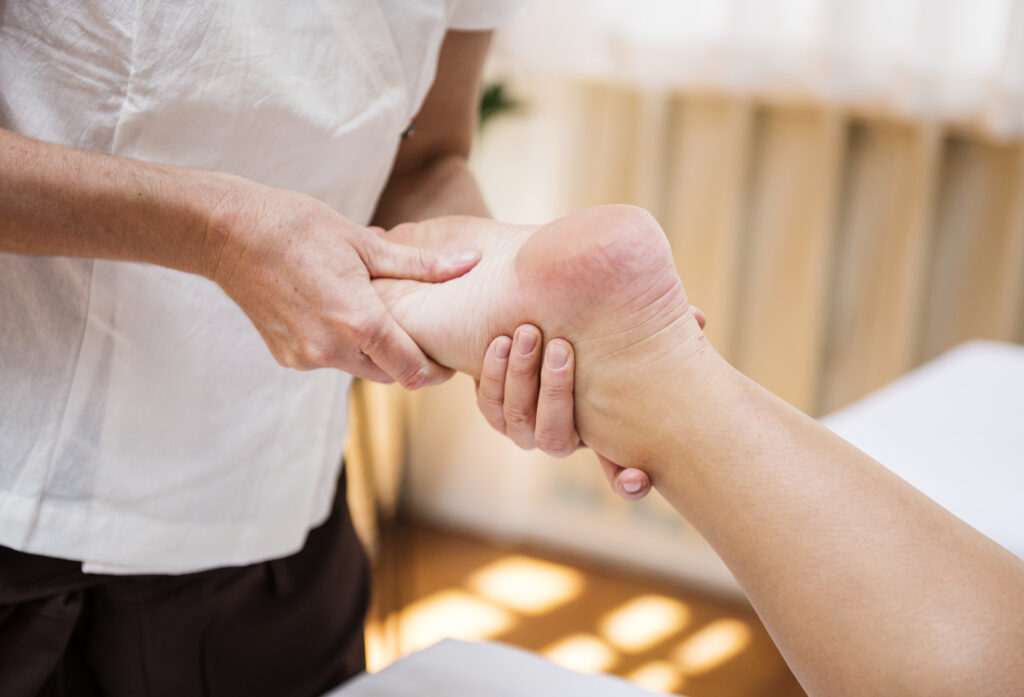
In fact, aggressively digging into an already sensitive area may make symptoms worse.
A massage therapist may instead work on several connected areas:
- Calf muscles
- Achilles tendon area
- Muscles along the arch
- The heel and surrounding tissue
- Ankle mobility
- Muscles in the lower leg
Tight calves are especially important because limited flexibility can increase tension through the Achilles tendon, placing extra strain on the plantar fascia with every step.
A professional massage session may include gentle tissue work, myofascial techniques, broad pressure, stretching, or focused work on tight areas away from the most painful spot.
The session should always be adjusted to your comfort level. A little tenderness may be expected, but sharp, burning, electric, or increasing pain is a reason to stop and reassess.
Simple Self-Massage Techniques to Try at Home
Gentle self-massage may help relieve surrounding tension and make your foot feel more comfortable. The key word is gentle since applying too much pressure may further irritate the already inflamed tissue
You should not try to “break up” the plantar fascia or force your way through intense pain.
Tennis Ball Roll
Sit in a chair and place a tennis ball or other moderately firm ball under your arch.
- Apply light pressure.
- Roll slowly from the heel toward the ball of your foot.
- Avoid pressing directly into sharp pain.
- Continue for one to two minutes.
A tennis ball is usually more forgiving than a very hard massage ball, making it a better option for beginners or anyone with more sensitive feet.
Gentle Thumb Massage
Cross one leg over the other so you can comfortably reach your foot.
- Place your thumbs near the heel.
- Use slow strokes along the arch toward your toes.
- Keep the pressure comfortable.
- Spend extra time around tense areas without forcing them.
If the tissue feels more irritated afterward, use less pressure or stop.
Calf Massage
The calf often deserves as much attention as the bottom of the foot.
- Use both hands to apply broad, slow pressure.
- Move from the ankle upward toward the knee.
- Avoid pressing directly behind the knee.
- Follow with a gentle calf stretch if it feels comfortable.
Relaxing the calf may reduce some of the pull transmitted through the Achilles tendon toward the heel.
Frozen Water Bottle Roll
A frozen water bottle combines gentle rolling with cold therapy.
- Cover the bottle with a thin towel.
- Roll it beneath the foot for up to 10 to 15 minutes.
- Keep the pressure light.
- Stop if the foot becomes painfully cold or numb.
People with diabetes, reduced sensation, nerve problems, or poor circulation should ask a healthcare provider before using cold therapy on the feet.
Plantar Fasciitis vs. Tarsal Tunnel Syndrome
Plantar fasciitis and tarsal tunnel syndrome can both cause pain around the heel or bottom of the foot, but they are not the same condition.
Plantar fasciitis involves irritated tissue along the bottom of the foot. Tarsal tunnel syndrome involves compression or damage to the tibial nerve as it passes through a narrow space near the inside of the ankle.
Plantar Fasciitis Commonly Feels Like:
- Sharp or stabbing heel pain
- Tenderness along the arch
- Pain with the first morning steps
- Pain after getting up from rest
- Discomfort after prolonged standing or activity
Tarsal Tunnel Syndrome Commonly Feels Like:
- Burning
- Tingling
- Pins and needles
- Numbness
- Pain near the inside of the ankle
- Symptoms spreading into the sole or toes
- Foot weakness in more severe cases
A simple way to remember the difference is that plantar fasciitis generally creates localized tissue pain, while tarsal tunnel syndrome often creates nerve-like symptoms.
However, symptom lists are not enough to make a diagnosis at home. Burning, tingling, numbness, or weakness should be evaluated by a qualified healthcare provider.
A provider may perform a Tinel’s test by tapping over the tibial nerve, but this test should be interpreted alongside your history, examination, and any other testing that may be needed. It should not be used as a do-it-yourself diagnosis.
Plantar Fasciitis vs. Heel Spurs
Heel spurs are another common source of confusion.
A heel spur is a bony growth that can form where the plantar fascia connects to the heel bone. It can be seen on an X-ray.
Plantar fasciitis affects soft tissue. A heel spur involves bone.
The important thing to know is that many people have heel spurs without experiencing any pain. According to the American Academy of Orthopaedic Surgeons, most people with heel spurs do not have heel pain, and the spur itself is not considered the cause of plantar fasciitis pain.
That means finding a heel spur on an X-ray does not automatically explain why your foot hurts.
Treatment typically focuses on the irritated plantar fascia and the factors placing stress on it. Instead of treating the heel spur itself, care usually focuses on reducing stress on the plantar fascia to relieve pain and improve function.
How Plantar Fasciitis Is Diagnosed
Plantar fasciitis is usually diagnosed through a conversation and physical examination.
A healthcare provider may ask:
- Where does the pain occur?
- When is it most intense?
- Does it hurt with the first steps in the morning?
- Have you recently changed your activity level?
- What type of shoes do you wear?
- Do you stand on hard surfaces for work?
- Do you have numbness, tingling, or weakness?
The provider may press gently along the heel and arch, assess ankle movement, and look at your foot structure.
Imaging is not always necessary. An X-ray, ultrasound, or MRI may be ordered if the diagnosis is unclear or if the provider wants to rule out another problem, such as a stress fracture, arthritis, nerve compression, or a more serious tissue injury.
Building a Complete Plantar Fasciitis Recovery Plan
Massage usually works best when it is combined with other healthy recovery habits.
A complete plan may include:
- Temporarily reducing aggravating activities
- Stretching the calf and plantar fascia
- Wearing supportive, cushioned shoes
- Using orthotics when recommended
- Avoiding barefoot walking on hard floors
- Gradually returning to exercise
- Strengthening the foot and lower leg
- Improving ankle mobility
- Using cold therapy appropriately
- Working with a physical therapist or healthcare provider
- Receiving massage for surrounding muscle tension
Consistency matters more than looking for one perfect treatment.
You may need to adjust your daily routine while your foot recovers such as choosing swimming instead of running or replacing worn-out shoes with more supportive footwear.
Most cases improve without surgery, but recovery can take weeks or months. Feeling somewhat better does not necessarily mean the plantar fascia is ready for an immediate return to intense activity.
Give your body time.
When to See a Healthcare Provider
While plantar fasciitis is one of the most common causes of heel pain, it’s not the only possible explanation.
Contact a healthcare provider if:
- The pain is severe or getting worse
- You cannot comfortably put weight on the foot
- Symptoms followed a fall or sudden injury
- You experience burning, tingling, or numbness
- The foot feels weak
- You notice significant swelling, redness, or warmth
- The pain keeps returning
- At-home care is not helping
- Symptoms feel different from your usual plantar fasciitis pain
- You have diabetes or reduced sensation in your feet
Cleveland Clinic recommends seeing a provider when heel or foot pain does not improve on its own within about a week or when symptoms fail to improve after trying conservative treatment.
Getting the correct diagnosis matters. Massage that feels helpful for tight calf muscles may not be the right approach for a stress fracture, acute nerve compression, infection, or another medical problem.
Massage for Plantar Fasciitis in Grand Rapids
Foot pain can affect nearly every part of your day, changing how you stand, walk, work, exercise, and distribute weight across the rest of your body.
When one foot hurts, you may begin compensating without realizing it. That can create additional tension in the calf, knee, hip, or lower back.
Massage therapy may help address some of those secondary tension patterns while supporting a broader plantar fasciitis recovery plan.
At Be Balanced Bodywork, every massage is adjusted to the client’s needs, comfort level, and wellness goals. Your therapist can focus on tight muscles in the foot and lower leg while avoiding pressure that aggravates an already sensitive area.
Massage should not be treated as a guaranteed cure, but it may help you feel more comfortable as you work toward healthier movement.
Take the Next Step Toward More Comfortable Movement
Plantar fasciitis can be stubborn, but it is manageable. Understanding what is causing your heel pain is the first step toward choosing the right care.
Massage may help relieve tension in the foot and calf, improve comfort, and make movement feel easier. The best results usually come from combining it with stretching, supportive footwear, activity changes, and professional healthcare guidance when needed.
If heel or arch pain is making it harder to work, exercise, or enjoy life around Grand Rapids, you do not have to simply push through it.
You don’t have to keep adjusting your day around heel and arch pain. If plantar fasciitis is making it harder to walk, work, exercise, or enjoy your usual routine, our team at Be Balanced Bodywork is here to help.
Contact us today or explore our massage services to learn how personalized massage therapy may support your recovery plan and help you move with comfort and ease.
FAQs About Plantar Fasciitis and Massage
Q: Can massage help plantar fasciitis?
A: Massage may help ease tension in the calf, foot, and surrounding tissues while supporting comfort and mobility. It should be used as one part of a broader treatment plan rather than as a stand-alone cure.
Q: Where should you massage for plantar fasciitis?
A: Gentle work may focus on the arch, calf muscles, lower leg, and tissues surrounding the heel. Avoid aggressively pressing into an acutely painful area.
Q: How often should I get a massage for plantar fasciitis?
A: Frequency depends on your symptoms, activity level, and treatment plan, so there’s no one-size-fits-all schedule. Your massage therapist and healthcare provider can help determine what works best for you.
Q: How can I tell plantar fasciitis from tarsal tunnel syndrome?
A: Plantar fasciitis usually causes localized heel or arch pain, especially during the first steps after rest. Tarsal tunnel syndrome more often causes burning, tingling, numbness, or weakness. A healthcare provider should evaluate uncertain symptoms.
Q: Is a heel spur the same as plantar fasciitis?
A: No. Plantar fasciitis affects the soft tissue beneath the foot, while a heel spur is a bony growth. Many people have heel spurs without pain.
Q: Is it safe to roll plantar fasciitis on a tennis ball?
A: Gentle rolling may feel helpful, but the pressure should remain comfortable. Stop if you experience sharp pain, burning, tingling, or worsening symptoms.