Whether you’re recovering from a workout or simply dealing with everyday muscle tension, hydration plays a bigger role in muscle health than many people realize.
Water supports normal circulation, temperature regulation, joint comfort, and the processes your body uses to deliver nutrients to active tissues. When you do not replace the fluids you lose throughout the day, your muscles may feel tired, tight, or less prepared for exercise and recovery.
Hydration also complements massage therapy. Drinking water will not magically erase soreness or “detox” the body, but it can support normal muscle function and help you maintain the healthy habits that make massage recovery more comfortable.
This guide explains how hydration supports muscle health, what can happen when your body is low on fluids, and how massage, movement, rest, and nutrition can work together to improve recovery.
Why Hydration Is Essential for Muscle Health
Skeletal muscle tissue contains a substantial amount of water. That water helps create the environment your muscles need to contract, relax, and perform everyday movements efficiently.
Hydration supports several important functions, including:
- Maintaining normal blood volume
- Transporting oxygen and nutrients
- Regulating body temperature
- Supporting muscle contraction
- Helping joints move comfortably
- Replacing fluid lost through sweat
- Supporting normal physical performance
While water is essential, it works alongside electrolytes like sodium and potassium to support fluid balance and muscle contraction.
Most people can meet their everyday electrolyte needs through a balanced diet, although prolonged exercise, heavy sweating, or time spent in hot weather may increase those needs.
When you are properly hydrated, your cardiovascular system can deliver blood and oxygen more efficiently during activity. Your body is also better prepared to regulate heat and replace fluids lost through perspiration.
This does not mean drinking one large glass of water immediately before a workout or massage will solve everything. Hydration works best as a consistent habit practiced throughout the day.
What Happens When Muscles Become Dehydrated?
Dehydration occurs when your body loses more fluid than it takes in. Fluid loss can happen through sweating, breathing, urination, illness, hot weather, and physical activity.
When fluid levels fall, you may notice:
- Fatigue
- Reduced endurance
- Headaches
- Thirst or dry mouth
- Darker urine
- Dizziness
- Muscle stiffness
- Reduced flexibility
- Physical activity feeling more difficult than usual
Dehydration may also contribute to muscle cramping in certain situations, particularly when fluid loss is combined with heat, prolonged exertion, or an electrolyte imbalance. Cramping can have many causes, however, so water alone may not resolve every episode.
Reduced fluid levels can also affect performance. When your body is working harder to regulate temperature and maintain circulation, exercise may feel more demanding. You may tire earlier or feel less coordinated than you normally would.
Good muscle hydration begins before soreness or fatigue sets in. Rather than trying to “catch up” all at once, drink fluids regularly across the day and pay attention to signals like thirst, urine color, weather, and activity level.
A simple hydration routine may include:
- Drinking water with meals
- Carrying a reusable water bottle
- Drinking before, during, and after exercise
- Increasing fluids during hot weather
- Replacing significant sweat losses gradually
- Eating water-rich foods such as fruit and vegetables
- Using electrolyte drinks selectively after long or very sweaty activity
For most ordinary days and typical massage appointments, plain water is an appropriate choice. Specialty hydration products are not necessary for everyone.
How Massage and Hydration Work Together
Massage therapy and hydration support the body in different but complementary ways.
Massage may help reduce the sensation of muscle tension, encourage relaxation, and temporarily improve comfort and movement. Depending on the technique and the person receiving it, massage may also support recovery after activity by helping tight areas feel less restricted.
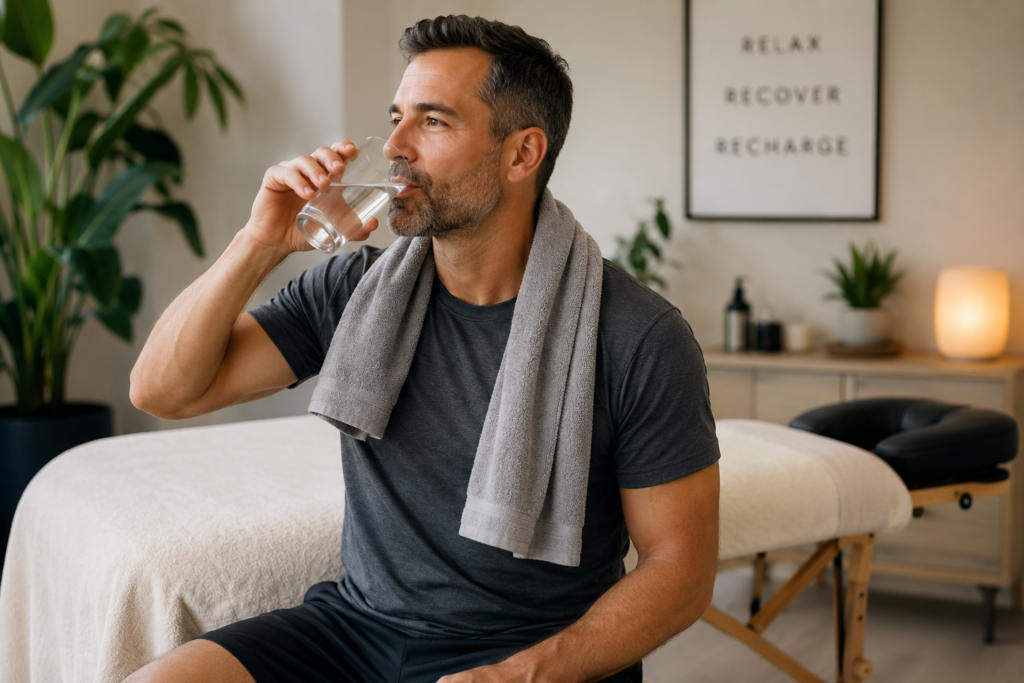
Hydration supports the normal physiological processes that continue before, during, and after your session. It helps maintain fluid balance and provides your body with the water it needs for routine circulation, temperature regulation, digestion, and kidney function.
You may have heard that drinking water after a massage “flushes out toxins.” That explanation is overly simplistic. Massage does not create a special detoxification process, and drinking extra water does not wash toxins directly out of sore muscles.
Your liver, kidneys, lungs, digestive system, and lymphatic system already manage the body’s normal waste-processing functions. Water helps those organs operate normally, but there is no need to force large amounts of fluid after an appointment.
The takeaway is simple: staying hydrated supports overall wellness and may help you feel better after your session.
The post-massage guidance from Hackensack Meridian Health also emphasizes the broader importance of drinking enough water consistently rather than treating hydration as a one-time step after massage.
A Simple Hydration Plan Around Your Massage
You do not need to follow a complicated drinking schedule to support massage recovery.
Before your appointment:
- Hydrate normally throughout the day
- Avoid arriving extremely thirsty
- Eat a light meal or snack if appropriate
- Limit excessive alcohol before treatment
- Let your therapist know if you feel dizzy, ill, or dehydrated
After your massage:
- Sit up slowly if you feel deeply relaxed
- Drink water according to your thirst
- Avoid gulping a large amount all at once
- Have a balanced meal or snack if needed
- Give yourself time to transition back into your day
For the rest of the day:
- Continue drinking fluids regularly
- Choose water as your main beverage
- Rest if your body feels tired
- Perform gentle movement or stretching if recommended
- Avoid an unusually intense workout immediately after deep bodywork unless you feel prepared for it
Avenue Five Institute’s post-massage hydration overview discusses how water supports many everyday bodily functions, reinforcing why hydration should be viewed as part of a broader wellness routine.
Individual hydration needs vary according to body size, health, medication use, activity level, diet, weather, pregnancy, and sweat rate.
People with certain heart or kidney conditions may have medically prescribed fluid limits and should follow their healthcare provider’s instructions rather than increasing water intake automatically.
Supporting Muscle Recovery After Physical Activity
Recovery does not begin and end with one massage appointment.
After exercise, your body may need time to restore fluid balance, replenish energy stores, repair stressed tissue, and adapt to the activity you performed. Hydration contributes to that process, but it is only one piece of the recovery plan.
Massage may help ease the sensation of tightness and support relaxation after a demanding workout. A sports massage may focus on the areas most affected by training, repetitive motion, or a specific activity.
For better muscle recovery, combine hydration and massage with:
- Adequate sleep
- Balanced nutrition
- Enough protein for your needs
- Gentle mobility work
- Rest between demanding workouts
- Gradual increases in training load
- Warm-ups and cool-downs
- Guidance from qualified healthcare or fitness professionals when needed
Each of these habits plays a different role, and together they create a stronger foundation for muscle recovery. Drinking plenty of water cannot compensate for inadequate sleep, poor nutrition, or repeatedly training through an injury. In the same way, massage cannot replace progressive exercise, rehabilitation, or medical treatment when those are needed.
Athletes and active adults often use massage as one part of a larger recovery routine. The goal may be to reduce the perception of soreness, maintain comfortable movement, and prepare mentally and physically for upcoming activity.
Want more practical guidance for the hours following your appointment? Read Be Balanced Bodywork’s guide on why you should drink water after a massage for additional post-massage care ideas.
What Muscle Soreness Relief Really Looks Like
It is normal to want soreness to disappear immediately, but recovery is usually gradual.
Helpful steps may include:
- Light movement
- Gentle stretching
- Adequate hydration
- Nutritious meals
- Quality sleep
- Heat or cold when appropriate
- Massage tailored to your comfort level
- Temporary modification of intense activity
Massage may provide muscle soreness relief for some people by decreasing the feeling of tension and supporting relaxation. Results vary according to the cause of the soreness, the massage technique, the person’s health, and how recently the activity occurred.
Mild tenderness after a deeper massage can sometimes happen. It should generally improve rather than become increasingly painful. Tell your therapist if pressure feels uncomfortable during the session so the treatment can be adjusted.
Persistent or severe pain should not be treated as routine workout soreness. Seek medical guidance for symptoms such as:
- Sudden or sharp pain
- Significant swelling
- Weakness
- Numbness or tingling
- Dark urine after intense exercise
- Pain following a traumatic injury
- Symptoms that continue to worsen
These concerns may need evaluation beyond massage and hydration.
Building Healthy Habits for Stronger Muscles
Hydration matters, but lasting muscle health comes from a group of consistent wellness habits.
Regular movement encourages strength, mobility, circulation, coordination, and confidence. Stretching and mobility exercises may help maintain comfortable range of motion when chosen appropriately. Balanced nutrition provides the energy and nutrients involved in tissue maintenance and recovery.
Sleep is equally important. During sleep, your body carries out many of the processes involved in physical restoration, hormone regulation, and nervous system recovery.
Massage therapy can complement those habits by helping you slow down, pay attention to areas of tension, and create space for physical recovery.
A balanced muscle-health routine may include:
- Regular strength and aerobic activity
- Mobility and flexibility work
- Consistent daily hydration
- Protein and nutrient-rich foods
- Rest days
- Enough sleep
- Stress management
- Massage therapy based on your needs
Consistency is more useful than relying on quick fixes. One sports drink, stretch, or massage cannot undo weeks of poor recovery habits. Small actions repeated regularly are what support muscle health over time.
The Benefits of Drinking Water as a Daily Habit
The benefits of drinking water extend well beyond massage recovery.
Water supports:
- Temperature regulation
- Normal circulation
- Digestion
- Kidney function
- Physical performance
- Fluid balance
- Delivery of nutrients
- Comfortable movement during activity
Your hydration needs are personal. The familiar advice to drink eight glasses daily can be a helpful reminder, but it is not a precise requirement for every body.
A more flexible approach is to:
- Drink when you are thirsty
- Increase fluids around exercise and heat
- Monitor urine color
- Include water-rich foods
- Replace fluids gradually after sweating
- Discuss specific needs with a healthcare professional when appropriate
Pale-yellow urine often suggests adequate hydration, while consistently dark urine may indicate you need more fluid. Certain supplements, foods, and medications can change urine color, so use this as a general clue rather than a medical test.
Northwest Career College’s discussion of hydration after massage therapy also connects post-session hydration with muscle recovery and general well-being. The most useful takeaway is not that you need to “detox,” but that steady hydration supports the body’s normal functions while you recover.
When Sports Massage May Be Beneficial
You don’t have to be a professional athlete to benefit from a sports massage.
It may be useful for runners, weightlifters, dancers, cyclists, recreational athletes, physically demanding workers, and anyone whose regular activity creates recurring muscle tension.
A sports massage may be adapted for:
- Pre-event preparation
- Post-event recovery
- Training maintenance
- Repetitive-use tension
- General athletic recovery
- Mobility goals
- Muscle soreness relief
Before activity, a session may use stimulating or movement-focused techniques designed to prepare the body without creating excessive relaxation or tenderness.
After activity, treatment may focus more on comfort, tension, and recovery. During regular training, massage may be scheduled according to workload, problem areas, and individual goals.
The best approach depends on:
- Your activity level
- Training schedule
- Injury history
- Current symptoms
- Pressure preference
- Recovery needs
- Upcoming events
A massage therapist should adjust the session based on how your body feels that day. More pressure is not automatically more effective, and painful treatment is not proof that a massage is “working.”
Hydration before and after sports massage supports general wellness, but massage should remain part of a broader recovery plan that includes movement, nutrition, rest, and appropriate medical care.
Experience Hydration After a Massage First Hand
Hydration supports muscle health by helping your body maintain normal circulation, temperature regulation, fluid balance, and physical performance. When you are dehydrated, muscles may feel more tired or stiff, and exercise may feel harder than usual.
Massage and hydration can work together as part of a thoughtful wellness routine. Massage may help reduce tension and support relaxation, while regular fluid intake helps your body carry out its everyday recovery functions.
Hydration is most effective when it’s part of a consistent wellness routine that includes movement, stretching, balanced nutrition, quality sleep, and massage therapy tailored to your body. Together, these habits help support healthier muscles and long-term recovery.
You do not need a quick fix or a forced post-massage “detox.” You need sustainable habits that help you feel and move your best.
Whether you’re recovering from exercise, managing muscle tension, or simply looking to support your overall wellness, our team at Be Balanced Bodywork is here to help. Schedule your next massage today, and experience the effects of hydration after a massage for yourself.
FAQs
Q: Why is hydration important for muscle health?
A: Water supports normal circulation, temperature regulation, muscle contraction, nutrient transport, and physical performance. Staying hydrated may also help reduce fatigue and stiffness associated with inadequate fluid intake.
Q: Should I drink water after a massage?
A: Yes. Continue hydrating normally after your session, especially if you exercised, spent time in the heat, or arrived mildly dehydrated. Drink according to your thirst rather than forcing an excessive amount of water all at once.
Q: Can massage help with muscle soreness?
A: Massage may help reduce the sensation of muscle tension and soreness while encouraging relaxation. Its effects vary, and persistent, severe, or injury-related pain should be evaluated by an appropriate healthcare professional.
Q: Is sports massage only for athletes?
A: No. Sports massage can benefit recreational exercisers, active workers, dancers, runners, and other people experiencing muscle tension related to regular physical activity. The treatment should be adjusted to the individual’s needs, health, and recovery goals.