The average office worker spends more than six hours a day sitting, and for many remote workers, that number can climb even higher.
While sitting may seem harmless, research continues to show that prolonged inactivity can contribute to muscle tension, poor posture, reduced mobility, and ongoing discomfort.
If you spend most of your day at a desk and find yourself feeling stiff and sore by the end of it, you’re certainly not alone.
Modern work habits have made sitting all day one of the most common causes of posture pain, muscle tightness, and reduced movement quality. The good news is that an ergonomic massage can help address those tension patterns, improve circulation, and restore balance to your body.
In this guide, we’ll explore how prolonged sitting affects the body and how massage therapy can help reduce tension and improve mobility..
How Sitting All Day Affects Your Body

Your body is designed to move, so when you spend hours sitting without enough movement throughout the day, tension and stiffness can start to build.
According to the Mayo Clinic, prolonged sitting is associated with reduced circulation, decreased muscle activity, and a higher risk of musculoskeletal discomfort. Even individuals who exercise regularly can experience negative effects if much of the rest of their day is spent sitting.
When you remain seated for long periods:
- Blood flow slows down
- Muscles become less active
- Posture begins to deteriorate
- Joints become stiff
- Energy levels often decrease
Over time, a sedentary lifestyle can contribute to:
- Tight hip flexors
- Weak core muscles
- Reduced spinal mobility
- Neck and shoulder tension
- Lower back discomfort
Many people assume the soreness they feel at the end of a workday is simply normal. In reality, it’s often a sign that the body has been held in the same position for too long.
As these movement limitations continue, certain muscle groups tend to absorb more strain than others.
Common Pain Patterns From Desk Work
Desk work creates several predictable tension patterns throughout the body.
Neck and Shoulder Stiffness
Forward head posture places extra strain on the muscles of the neck and upper shoulders. The farther the head drifts forward, the harder these muscles must work to support it.
Upper Back Tension
Rounded shoulders often develop during long periods of computer use. This can create tension between the shoulder blades and throughout the upper back.
Tight Hips and Lower Back Pain
Sitting keeps the hips in a shortened position for extended periods. Over time, this can contribute to hip tightness and increased stress on the lower back.
General Body Stiffness
It’s common to feel significantly stiffer at the end of the day. This stiffness can make everyday activities feel more difficult than they should.
These patterns are incredibly common among office workers, students, remote employees, and anyone spending long hours in front of a screen.
Fortunately, there are ways to address these tension patterns before they become long-term problems.
What Is an Ergonomic Massage?
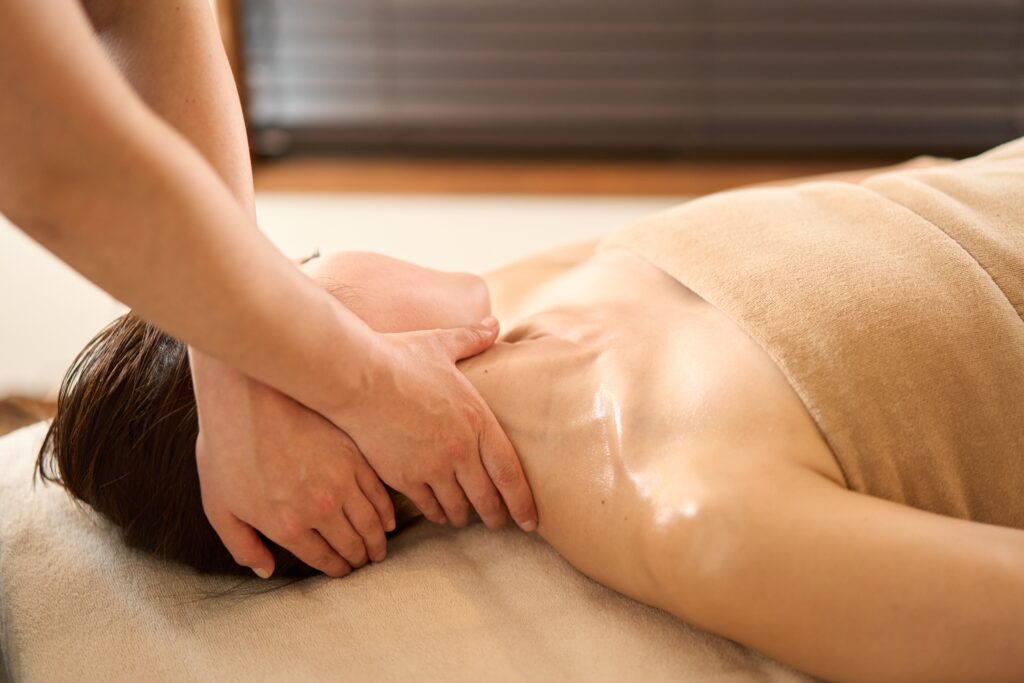
An ergonomic massage is a bodywork approach designed to address muscular imbalances caused by posture, repetitive strain, and prolonged sitting.
Unlike a general relaxation massage, ergonomic massage focuses specifically on:
- Correcting posture-related tension patterns
- Restoring movement and mobility
- Improving muscular balance
- Relieving repetitive-use strain
- Helping improve mobilitySupporting healthier movement habits
The goal is not simply to help you feel better temporarily, but to address the physical effects of poor ergonomics and repetitive positioning.
Many of the same principles recommended in workplace ergonomics guidelines -– such as proper alignment, movement, and posture support– are reinforced through targeted massage therapy.
This makes ergonomic massage especially valuable for people experiencing:
- Posture pain
- Neck and shoulder stiffness
- Upper back tension
- Lower back discomfort
- Hip tightness
To understand why this approach can be effective, it helps to look at what prolonged sitting does to the muscles themselves.
How Ergonomic Massage Works on Tight Muscles
When muscles remain in shortened or overworked positions for long periods, they can develop chronic tension patterns that become difficult to release through stretching alone.
An ergonomic massage targets the muscle groups most commonly affected by desk work, including:
- Neck muscles
- Upper trapezius muscles
- Shoulders
- Upper back
- Hip flexors
- Lower back muscles
Massage helps by:
- Increasing circulation to stiff tissues
- Improving oxygen delivery
- Reducing muscle guarding
- Encouraging natural movement patterns
- Supporting mobility improvement
As circulation improves, muscles often become more responsive and less restricted.
For many people, addressing these areas creates immediate relief while also supporting long-term posture improvements.
If you’d like a deeper look at how stress contributes to muscle tightness, check out our guide on stress and muscle tension relief through massage therapy.
Benefits of Ergonomic Massage for Office Workers
One of the biggest advantages of ergonomic massage is that it directly addresses the physical demands of modern work.
Improved Comfort During Daily Activities
When muscles become less restricted, everyday movement often feels easier.
Simple activities like the following may start to feel easier:
- Walking
- Bending over
- Carrying groceries
- Climbing stairs
- Getting out of bed can feel noticeably more comfortable.
Reduced Body Stiffness
Massage encourages movement in tissues that have become tight from inactivity.
This can help reduce the stiffness and tension that often develops after sitting all day.
Better Stress Management
Work-related stress and muscle tension frequently go hand in hand.
Massage helps calm the nervous system while releasing physical tension, creating benefits for both mental and physical wellness.
Support for Long-Term Workplace Wellness
Rather than waiting until pain becomes severe, many people use ergonomic massage as a proactive tool for maintaining comfort and preventing recurring tension patterns.
While massage therapy can be incredibly helpful, daily movement habits also play a major role in reducing discomfort.
How to Prevent Pain from Sitting All Day
Massage therapy works best when combined with healthy movement habits.
Here are some practical ways to reduce posture pain throughout the workday:
Take Movement Breaks
Aim for 5-minute movement breaks every 30–60 minutes whenever possible.
Even a short walk around your office or home can make a difference.
Improve Your Workstation Setup
Pay attention to:
- Chair height
- Monitor position
- Keyboard placement
- Lumbar support
Small ergonomic adjustments can significantly reduce strain.
Stretch Key Areas
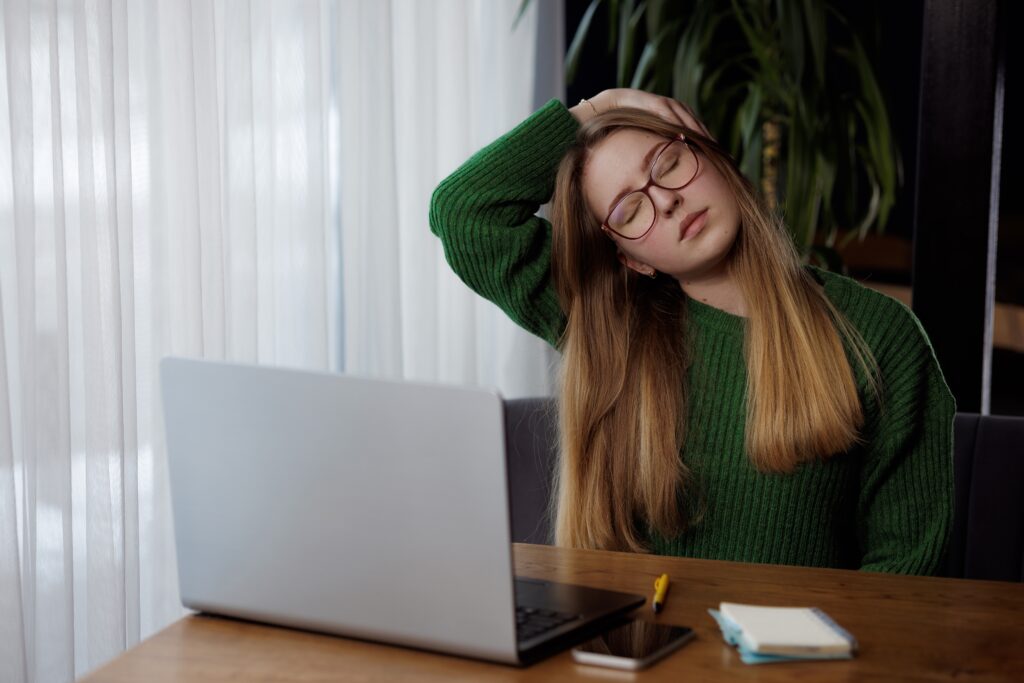
Focus on:
- Neck stretches
- Shoulder mobility
- Hip flexor stretches
- Lower back mobility exercises
These movements help combat the effects of prolonged sitting.
Strengthen Supporting Muscles
Building strength in the:
- Core
- Upper back
- Glutes
helps support better posture and reduce strain.
Combine Movement with Massage
The combination of healthy movement habits and ergonomic massage creates one of the most effective strategies for recovering from a sedentary lifestyle.
Why Recovery Matters Just as Much as Movement
Many people focus on exercise but overlook recovery.
The reality is that muscles adapt and improve when they are given opportunities to recover properly.
Massage therapy helps support recovery by:
- Reducing muscular stress
- Improving circulation
- Supporting relaxation
- Encouraging better movement quality
For individuals who spend much of their day sitting, recovery becomes especially important because the body is constantly adapting to repetitive postural demands.
Regular bodywork helps interrupt those patterns before they become chronic problems.
Creating a Sustainable Wellness Routine
The best approach to posture pain is one you can maintain consistently.
That doesn’t mean you need to completely overhaul your lifestyle overnight.
Small improvements often create the biggest long-term results:
- Better workstation setup
- Regular movement breaks
- Gentle stretching
- Stress management
- Consistent massage therapy
Over time, these habits help create a body that feels stronger, more mobile, and more comfortable throughout the day.
Use Massage to Recover from Sitting All Day
The discomfort that comes from sitting all day is incredibly common… but it doesn’t have to become your normal.
An ergonomic massage can help address posture-related muscle tension, improve circulation, reduce body stiffness, and support healthier movement patterns.
Combined with better ergonomics and regular movement, massage therapy can play an important role in helping your body recover from the demands of modern work life.
If you’re ready to relieve tension from sitting all day and improve your posture, contact us today to schedule your session and start feeling relief and comfort in your daily life.
FAQs
Q: What is an ergonomic massage?
A: An ergonomic massage is a therapeutic bodywork approach that focuses on correcting posture-related muscle tension caused by sitting, repetitive strain, and poor ergonomics.
Q: Can ergonomic massage help with posture pain?
A: Yes. It helps release tight muscles and improve alignment, which can reduce discomfort caused by poor posture.
Q: How does sitting all day affect the body?
A: Prolonged sitting can contribute to muscle stiffness, poor circulation, tight hips, lower back discomfort, and neck and shoulder tension.
Q: Who benefits most from ergonomic massage?
A: Office workers, remote workers, students, and anyone experiencing a sedentary lifestyle or chronic posture-related discomfort often benefit the most.